
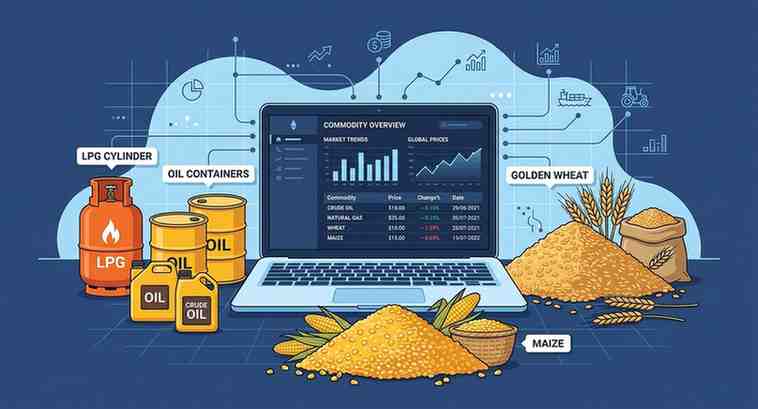
Using Commodity ETFs for Portfolio Risk Reduction
Using Commodity ETFs for Portfolio Risk Reduction
What are Commodity ETFs and How Do They Help Reduce Portfolio Risk?
Commodity ETFs are investment instruments that provide exposure to commodities like gold and silver without requiring physical ownership. They are widely used for portfolio diversification and risk management, as commodities often behave differently from equities and debt instruments. By including commodity ETFs, investors can potentially reduce overall portfolio volatility and hedge against inflation and market uncertainty.
Understanding Commodity ETFs in India
Commodity ETFs are exchange-traded funds that track the price of underlying commodities such as gold or silver. In India, these instruments are regulated by the Securities and Exchange Board of India and traded on exchanges like the National Stock Exchange and Bombay Stock Exchange.
They offer:
- Transparency in pricing
- High liquidity through exchange trading
- Ease of investment via demat accounts
For retail investors, commodity ETFs provide a practical alternative to physical commodities, eliminating storage and purity concerns.
Why Use Commodity ETFs for Diversification?
Diversification helps reduce the impact of market volatility by spreading investments across different asset classes. This is where commodity ETFs for diversification become relevant.
Commodities—especially gold—often show low or negative correlation with equities. For example:
- When equity markets decline, gold prices may remain stable or increase
- During economic uncertainty, commodities may act as a stabilising component
This makes commodity ETFs a useful tool in portfolio risk management using commodity ETFs, particularly in uncertain market conditions.
Hedging Portfolio Risk with ETFs
Hedging portfolio risk with ETFs involves using commodity exposure to offset potential losses in other investments.
Common scenarios include:
- Inflationary periods: Commodity prices tend to rise, helping preserve purchasing power
- Currency depreciation: Gold may act as a store of value
- Market volatility: Investors may shift towards relatively stable assets
By including commodity ETFs, investors can create a buffer against macroeconomic risks.
How Commodity ETFs Reduce Volatility
Understanding how commodity ETFs reduce volatility requires examining asset correlation.
Since commodities behave differently from equities and debt:
- They can reduce overall portfolio fluctuations
- They may limit drawdowns during equity market corrections
- They contribute to more balanced risk-adjusted returns
However, commodity ETFs are still market-linked instruments and can experience price fluctuations.
Gold and Commodity ETF Investment Strategy
A structured gold and commodity ETF investment strategy typically involves allocating a limited portion of the portfolio—commonly between 5% and 15%, depending on individual financial goals.
Approaches to Consider
- Strategic Allocation
Maintaining a fixed percentage in commodity ETFs as part of long-term asset allocation. - Tactical Allocation
Adjusting exposure based on macroeconomic indicators such as inflation or interest rates. - Systematic Investment Approach
Investing gradually over time to manage price volatility and timing risks.
Comparison Table: Commodity ETFs vs Equity vs Debt
| Feature | Commodity ETFs (e.g., Gold ETFs) | Equity Investments (Stocks) | Debt Instruments (Bonds/FDs) |
| Primary Purpose | Diversification & hedging | Wealth creation | Income stability |
| Risk Level | Moderate | High | Low to Moderate |
| Return Potential | Market-linked | Market-linked | Relatively stable |
| Correlation with Equity Market | Low / Negative | High | Low |
| Inflation Protection | Effective (especially gold) | Partial | Limited |
| Liquidity | High | High | Moderate |
| Taxation (India) | Non-equity taxation rules | Equity taxation | As per income slab |
| Suitable For | Risk reduction | Growth-focused investors | Conservative investors |
Key Considerations for Indian Investors
Before investing in commodity ETFs, consider:
- Expense Ratio: Lower costs improve long-term efficiency
- Tracking Error: Reflects how closely the ETF tracks the commodity price
- Liquidity: Higher trading volume ensures smoother transactions
- Taxation: Commodity ETFs are taxed as non-equity investments in India
Risk Disclosure and Compliance Note
Investments in commodity ETFs are subject to market risks. Prices may fluctuate due to global economic conditions, currency movements, and geopolitical events.
Investors are advised to:
- Read all scheme-related documents carefully
- Evaluate their risk tolerance
- Consult a financial advisor before making investment decisions
This content is intended for educational purposes and does not constitute investment advice.
Conclusion
Commodity ETFs can play a meaningful role in a diversified portfolio by offering exposure to assets that behave differently from equities and debt. They support portfolio risk management using commodity ETFs by helping reduce volatility and providing a potential hedge against inflation.
About GigaPro: Beyond basic trading, GigaPro mobile trading app equips users with a suite of advanced features to enhance their trading strategies. Download the app today to start your trading journey on your Android device: (Download GigaPro Mobile App) or on your Apple device: (Download GigaPro Mobile App).
Sources and Official References
Securities and Exchange Board of India
Association of Mutual Funds in India
NSE Indices Limited
BSE Limited
Related Blogs:
How Global Commodity Prices Influence Quoted Prices in India
How Quoted Prices Are Determined in Commodity Exchanges
What is Quoted Price in Commodity Trading?
What is Commodity Trading?
How to Diversify Your Portfolio with Commodities: A Strategic Approach
The Rising Appeal of Commodities for Indian Investors
Top Strategies and Tips for Maximizing Profits in Commodity Trading
Different Types of Commodities and Their Trading Characteristics
Beyond Stocks: Exploring the World of Commodities
Diversification Strategies: Combining Commodities and Equities
Commodity vs Equity Market: A Beginner’s Guide to Understanding the Differences
What are Commodities? Understanding the Basics
Why Energy Commodities Deserve a Spot in Your Indian Investments
Disclaimer: This blog post is intended for informational purposes only and should not be considered financial advice. The financial data presented is subject to change over time, and the securities mentioned are examples only and do not constitute investment recommendations. Always conduct thorough research and consult with a qualified financial advisor before making any investment decisions.
How much of my portfolio should I allocate to commodity ETFs in India?
A typical allocation ranges between 5% and 15%, depending on risk tolerance, investment horizon, and financial goals. This helps in diversification without excessive exposure to commodity price movements.
Are gold ETFs safer than physical gold for retail investors?
Gold ETFs remove storage and purity-related concerns associated with physical gold. However, they remain subject to market risks. The choice depends on investor preference and investment objectives.
How are commodity ETFs taxed in India?
Commodity ETFs are generally taxed as non-equity investments. Capital gains taxation depends on the holding period and prevailing tax laws. Investors should verify current regulations or consult a tax advisor.