

Growth Option vs IDCW – Which One to Choose While Investing in Mutual Funds?
Growth Option vs IDCW – Which One to Choose While Investing in Mutual Funds?
When investing in mutual funds, one of the first choices investors come across is selecting between the Growth option and the IDCW option. While both belong to the same scheme and hold the same portfolio, they behave differently in terms of earnings, payouts, tax treatment, and long-term wealth building. This is why many investors actively search for clarity on growth option vs IDCW in mutual funds, especially when aligning investments with their financial goals.
Thank you for reading this post, don't forget to subscribe!This article aims to provide a clear understanding of both options, the difference between growth and IDCW option, and how each one fits into different investment preferences. A neutral and informed perspective can help you choose the option that supports your objectives more effectively.Understanding IDCW Meaning in Mutual Funds
Before comparing the two options, it is important to understand IDCW meaning in mutual funds. IDCW stands for Income Distribution cum Capital Withdrawal. This option replaced the earlier “Dividend Option” after regulatory changes. Under IDCW, a portion of the fund’s profits or gains may be distributed to investors from time to time. These payouts are not guaranteed and depend on the fund’s performance and distribution policy.
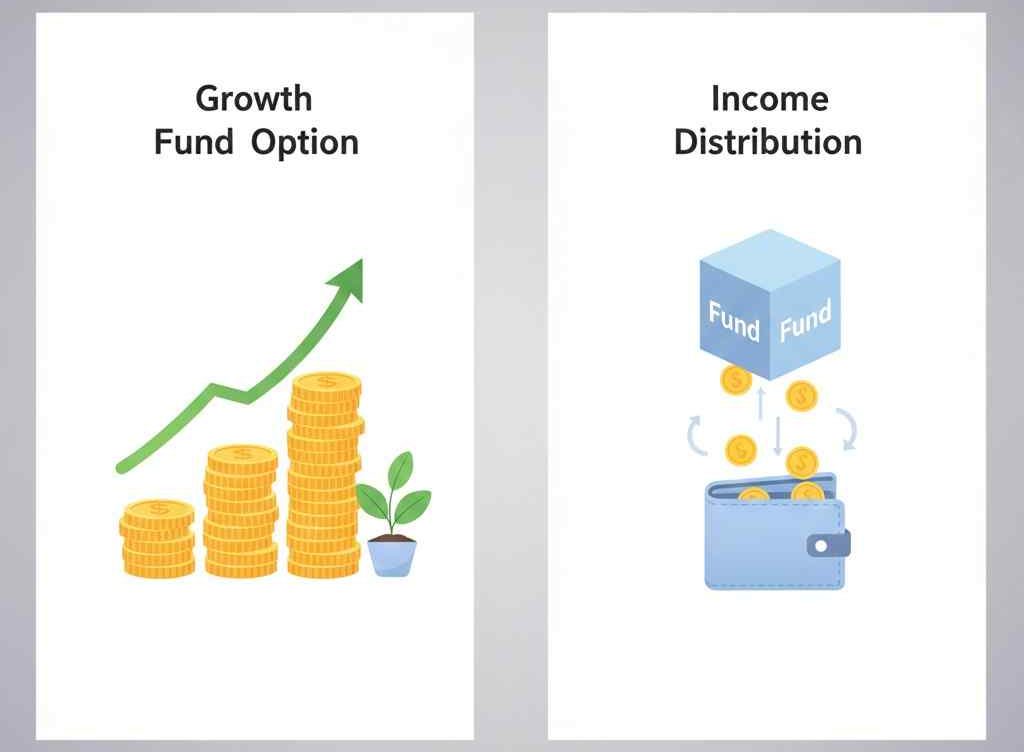
IDCW payouts are made from the scheme’s distributable surplus. When the payout takes place, the NAV (Net Asset Value) of the scheme typically reduces by the distribution amount. Many investors prefer IDCW when they want periodic income or cash flow from their investments.
What Is the Growth Option in Mutual Funds?
In the Growth option, the fund retains its profits and does not make any payouts. The gains remain invested within the scheme, allowing the NAV to appreciate over time. Investors do not receive any periodic income, but the value of their investment may grow as the fund performs.
This approach is generally preferred by individuals focused on long-term wealth creation, retirement planning, or goals where immediate cash flow is not required. Because the earnings remain invested, the returns compound over time.
Growth Option vs IDCW in Mutual Funds: How They Differ
To understand the difference between growth and IDCW option, it helps to look at how each behaves with respect to earnings, taxation, and suitability.
1. Earnings and NAV Movement
Growth Option:
All profits are reinvested, contributing to NAV growth. The investor benefits from compounding over time.
IDCW Option:
A portion of the scheme’s profits may be distributed. After distribution, the NAV reduces. This can help investors seeking occasional liquidity without redeeming units.
2. Cash Flow Requirement
Growth Option:
No payouts are provided. Suitable for investors who are comfortable not receiving interim income and prefer capital appreciation.
IDCW Option:
IDCW provides intermittent income, which may suit investors who want supplementary cash flow.
3. Taxation
Taxation plays an important role when choosing between the two options. Under IDCW, payouts are added to the investor’s income and taxed according to the individual’s income tax slab. This means that IDCW may be less favourable for individuals in higher tax brackets.
In the Growth option, investors are taxed only when they redeem their units. Capital gains taxation applies based on whether the fund is equity-oriented or debt-oriented and the holding period.
4. Impact on Long-Term Wealth Building
Because the Growth option reinvests all gains, it may support compounding more consistently. IDCW payouts, on the other hand, may interrupt compounding because part of the gains is distributed rather than reinvested.
Which Is Better: Growth or IDCW Option?
Many investors look for a straightforward answer to which is better growth or IDCW option, but the appropriate choice depends on individual goals, tax considerations, and cash flow needs.
Choose the Growth Option If:
- Your goal is long-term wealth accumulation.
- You are comfortable with not receiving periodic income.
- You want your gains to remain invested for compounding.
- You prefer to manage taxation at the time of redemption rather than at the time of distribution.
Choose the IDCW Option If:
- You prefer periodic income from your investments.
- You want cash flow without redeeming units.
- You have short- to medium-term financial needs that align with receiving distributions.
- You fall under a tax bracket where IDCW taxation is manageable or acceptable.
Growth Option Mutual Fund Benefits
The growth option mutual fund benefits mainly revolve around capital appreciation and compounding. Here are some of the advantages investors typically consider:
1. Compounding Over Time
Earnings stay invested, allowing the investment to grow as the fund performs.
2. Suitable for Long-Term Goals
Investors planning for major financial milestones often rely on the growth option to build capital steadily.
3. Tax-Efficient for Many Investors
Capital gains are taxed only at redemption, giving investors the ability to time their withdrawals based on personal tax planning.
4. Aligned with Goal-Based Investing
Whether it is retirement or children’s education, the growth option supports goal-based strategies because the accumulation remains uninterrupted.
IDCW Option: When It Makes Sense
While the growth option focuses on accumulation, IDCW may be useful for those who want intermittent cash flows. Here are some scenarios where IDCW might fit:
1. Need for Supplementary Income
Retirees or individuals who wish to receive periodic payouts may consider IDCW for liquidity.
2. Low-Risk Requirement for Cash Flow
Some investors prefer receiving payouts instead of redeeming units during uncertain market phases.
3. Short-Term Financial Planning
For financial needs in the near future, IDCW may provide better alignment, especially for low-risk debt-oriented mutual funds.
Suitability Analysis for Indian Investors
Indian investors often choose between these two options based on income patterns, tax considerations, and retirement planning. Here are some practical insights:
1. Salaried Professionals
Professionals with steady income usually prefer the Growth option to build long-term wealth.
2. Retirees
Retirees seeking regular income may consider IDCW, depending on their tax bracket and financial needs.
3. Conservative Investors
Those who prefer visible payouts and steady income may favour IDCW, especially in debt mutual funds.
4. Long-Term Investors
Individuals investing for long-term goals tend to opt for the Growth option due to compounding benefits.
How Investors Make Their Choice
When users search for topics like growth option vs IDCW in mutual funds, they usually want clarity on:
- Which option aligns with their financial needs
- How taxation differs
- How returns are affected
- Suitability for long-term or short-term goals
- Cash flow preferences
Understanding these aspects can help investors make informed decisions.
Conclusion
The decision between the Growth option and the IDCW option depends entirely on your personal financial goals, tax considerations, and cash flow preferences. While the Growth option supports long-term wealth accumulation through reinvestment, the IDCW option may suit investors who prefer receiving periodic income.
Assess your financial objectives, investment horizon, and tax situation before choosing between these options. Both serve distinct purposes, and aligning the right option with your goals can help create a more effective investment strategy.
Related Blogs:
What are Closed-Ended Mutual Funds?
Lump Sum Investments – How Is It Different from an SIP?
What Are Open Ended Mutual Funds?
What is Reversal Trading?
What Is an Auction Market and How Does It Work?
Understanding Mutual Fund SIP Returns: How to Calculate and Maximize Your Earnings
SIP Calculator and Inflation: Understanding How Inflation Impacts Your Mutual Fund Returns
SIP vs. Lumpsum: What’s the Best Way to Invest in Mutual Funds for Retirement?
How to Use a SIP Calculator for Investment Planning?
Reach Your Financial Milestones Sooner with Step-Up SIPs
What is a SIP Calculator and How Can It Help?
SIP vs Lump Sum: Which Investment Strategy Is Better?
Why Smart Investors in India are Choosing Systematic Investment Plan (SIPs)
How to Start a SIP for Your Child’s Education or Future Goals
The Power of SIPs: Why Consistency Beats Timing the Market
Disclaimer: This blog post is intended for informational purposes only and should not be considered financial advice. The financial data presented is subject to change over time, and the securities mentioned are examples only and do not constitute investment recommendations. Always conduct thorough research and consult with a qualified financial advisor before making any investment decisions.
