

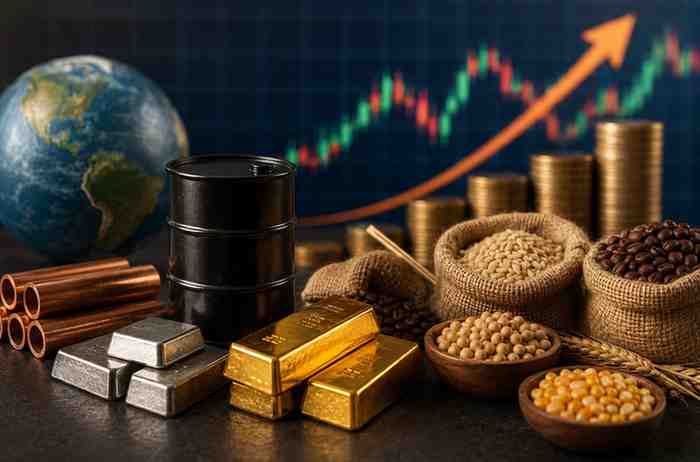
How Commodities and Inflation Are Connected
How Commodities and Inflation Are Connected
Inflation influences almost every aspect of the economy, from household expenses and business costs to investment decisions. Whether it is the rising price of groceries, fuel, or raw materials, inflation affects purchasing power and financial planning. At the same time, commodities often play a significant role in driving inflationary trends.
Thank you for reading this post, don't forget to subscribe!Understanding the connection between commodities and inflation can help investors better interpret market movements and make informed decisions. While commodities are often viewed as assets that may help preserve value during inflationary periods, their relationship with inflation is more nuanced than many investors realize.
In this article, we explore the relationship between commodities and inflation, examine how inflation affects commodity prices, and discuss the role of commodities in a diversified investment portfolio.
Commodities and inflation are closely linked because commodities such as crude oil, metals, and agricultural products form the foundation of economic activity. When commodity prices rise, production and transportation costs often increase, which can contribute to higher consumer prices. Conversely, inflation can also push commodity prices upward due to increased demand and currency depreciation. As a result, many investors consider commodities as an inflation hedge, although their effectiveness can vary depending on market conditions.
What Are Commodities?
Commodities are basic raw materials or primary agricultural products that can be bought and sold in markets. They are generally classified into four broad categories:
- Energy commodities (crude oil, natural gas)
- Precious metals (gold, silver)
- Industrial metals (copper, aluminium)
- Agricultural commodities (wheat, rice, cotton, sugar)
These resources serve as essential inputs for manufacturing, transportation, construction, and food production. Because commodities are fundamental to economic activity, changes in their prices often influence broader inflation trends.
Understanding Inflation
Inflation refers to the gradual increase in the prices of goods and services over time, resulting in a decline in purchasing power. In India, inflation is commonly measured using indicators such as the Consumer Price Index (CPI) and the Wholesale Price Index (WPI).
Several factors can contribute to inflation, including:
- Rising production costs
- Supply chain disruptions
- Increased consumer demand
- Expansionary monetary policies
- Currency depreciation
Commodity markets frequently interact with these factors, making the connection between commodity prices and inflation particularly important.
The Relationship between Commodities and Inflation
The relationship between commodities and inflation is often described as a two-way interaction. Commodity prices can influence inflation, while inflation itself can affect commodity markets.
- Rising Commodity Prices Can Contribute to Inflation
Many commodities serve as inputs for producing goods and delivering services. When the prices of these raw materials increase, businesses often face higher operating costs.
For example:
- Rising crude oil prices can increase transportation expenses.
- Higher metal prices can raise manufacturing costs.
- Increased agricultural commodity prices can impact food inflation.
Businesses may pass a portion of these higher costs to consumers, contributing to inflation across the economy.
This phenomenon is commonly referred to as cost-push inflation.
- Inflation Can Drive Commodity Prices Higher
The relationship also works in the opposite direction.
During inflationary periods, investors and institutions may seek assets that have historically shown resilience against declining purchasing power. This increased demand can support commodity prices.
Additionally, inflation is sometimes accompanied by currency depreciation. Since many commodities are globally traded and priced in U.S. dollars, a weaker domestic currency can make imported commodities more expensive, contributing to higher prices.
How Inflation Affects Commodity Prices
Many investors search for information on how inflation affects commodity prices because commodity markets often react differently from traditional financial assets.
Several mechanisms influence commodity pricing during inflationary environments:
Increased Production Costs
Inflation can increase labour, transportation, storage, and energy costs. Producers may need to charge higher prices to maintain profitability, leading to rising commodity prices.
Currency Movements
A depreciating currency can increase the cost of importing commodities. Countries that rely heavily on commodity imports may experience higher domestic prices when inflation and currency weakness occur simultaneously.
Investor Demand
During periods of elevated inflation expectations, some investors allocate capital to commodity-related assets. Increased investment demand may support commodity prices, especially in sectors such as precious metals and energy.
Supply Constraints
Inflationary environments can sometimes coincide with supply-side disruptions, including geopolitical events, adverse weather conditions, or production bottlenecks. Limited supply combined with strong demand can place upward pressure on prices.
Commodities as an Inflation Hedge
One reason investors often discuss commodities and inflation together is the perception that commodities can act as an inflation hedge.
An inflation hedge is an asset that may help preserve purchasing power when the general price level rises.
Why Commodities Are Considered an Inflation Hedge
Commodity prices often rise during periods of increasing inflation because:
- Raw material costs increase.
- Businesses require commodities regardless of economic conditions.
- Physical assets may retain value when currencies lose purchasing power.
- Global demand for essential resources remains relatively stable.
For example, gold is frequently discussed during inflationary periods because it is viewed by some investors as a store of value. Similarly, energy commodities and industrial metals may experience price appreciation when inflation is driven by economic growth and increased demand.
Important Limitations
Although commodities as an inflation hedge is a widely discussed concept, investors should understand that commodities do not always move in line with inflation.
Commodity prices are influenced by numerous factors, including:
- Global demand and supply dynamics
- Government policies
- Weather conditions
- Geopolitical developments
- Currency fluctuations
As a result, commodity investments can experience periods of volatility even when inflation remains elevated.
Commodities and Inflation
For Indian investors, the connection between commodity prices and inflation is particularly relevant because India imports several critical commodities, including crude oil.
Changes in global commodity markets can affect:
- Fuel prices
- Transportation costs
- Manufacturing expenses
- Food prices
- Overall inflation levels
For instance, sustained increases in crude oil prices can influence logistics and production costs across multiple industries, contributing to inflationary pressures within the economy.
Similarly, fluctuations in agricultural commodity prices can impact food inflation, which forms a significant component of household expenditure.
Understanding these relationships can help investors interpret economic developments and market trends more effectively.
How Retail Investors Can Gain Commodity Exposure
Investors interested in commodity investing during inflation periods can consider various avenues, depending on their financial goals and risk tolerance.
Some common options include:
- Commodity mutual funds
- Exchange-traded funds (ETFs) with commodity exposure
- Gold ETFs
- Sovereign Gold Bonds (subject to availability and prevailing regulations)
- Commodity derivatives for eligible and informed participants
It is important to note that each investment avenue carries its own risks, costs, and suitability considerations. Investors should carefully evaluate their financial objectives before making investment decisions.
Example: How Commodity Inflation Can Affect Daily Life
Consider a scenario where crude oil prices increase significantly.
The impact may extend beyond fuel stations:
- Transportation companies face higher fuel costs.
- Logistics expenses increase.
- Manufacturers incur higher distribution costs.
- Retailers adjust product pricing.
- Consumers pay more for goods and services.
This example illustrates how changes in commodity prices and inflation can influence the broader economy and everyday expenses.
Key Takeaways
- Commodities and inflation share a closely interconnected relationship.
- Rising commodity prices can contribute to inflation through higher production and transportation costs.
- Inflation can also support commodity prices through increased demand and currency effects.
- Many investors consider commodities as an inflation hedge, but their performance can vary depending on market conditions.
- Commodity prices are influenced by multiple factors beyond inflation, including supply-demand dynamics and geopolitical developments.
- Understanding the relationship between commodities and inflation can help investors interpret economic trends and portfolio risks more effectively.
Conclusion
The connection between commodities and inflation is one of the fundamental relationships in financial markets. Commodities often influence inflation through production costs, while inflation can affect commodity demand, pricing, and investment flows.
For investors, understanding how inflation affects commodity prices can provide valuable context when evaluating economic conditions and market developments. However, commodities should not be viewed in isolation. Their performance depends on a combination of macroeconomic, geopolitical, and industry-specific factors.
As with any investment decision, investors should assess their financial objectives, risk tolerance, and investment horizon before considering exposure to commodity-related assets.
Sources and Official References
Securities and Exchange Board of India
Association of Mutual Funds in India
NSE Indices Limited
BSE Limited
Related Blogs:
Beginner’s Guide to Gold and Silver ETF Investment in India
What are Closed-Ended Mutual Funds?
Lump Sum Investments – How Is It Different from an SIP?
What Are Open Ended Mutual Funds?
What is Reversal Trading?
What Is an Auction Market and How Does It Work?
Understanding Mutual Fund SIP Returns: How to Calculate and Maximize Your Earnings
SIP Calculator and Inflation: Understanding How Inflation Impacts Your Mutual Fund Returns
SIP vs. Lumpsum: What’s the Best Way to Invest in Mutual Funds for Retirement?
How to Use a SIP Calculator for Investment Planning?
Reach Your Financial Milestones Sooner with Step-Up SIPs
What is a SIP Calculator and How Can It Help?
SIP vs Lump Sum: Which Investment Strategy Is Better?
Why Smart Investors in India are Choosing Systematic Investment Plan (SIPs)
How to Start a SIP for Your Child’s Education or Future Goals
The Power of SIPs: Why Consistency Beats Timing the Market
Disclaimer: This blog post is intended for informational purposes only and should not be considered financial advice. The financial data presented is subject to change over time, and the securities mentioned are examples only and do not constitute investment recommendations. Always conduct thorough research and consult with a qualified financial advisor before making any investment decisions.
Are commodities always a good investment during inflation?
Not necessarily. While some commodities may perform well during inflationary periods, commodity prices can be affected by several factors such as demand, supply, geopolitical events, and currency movements.
Which commodities are commonly associated with inflation protection?
Gold, crude oil, industrial metals, and certain agricultural commodities are often discussed in relation to inflation, although performance varies across market cycles.
How can Indian investors invest in commodities?
Indian investors can gain exposure through commodity mutual funds, Gold ETFs, Sovereign Gold Bonds, and certain commodity-linked investment products, subject to eligibility and regulatory requirements.
Why do commodity prices influence inflation?
Commodities are essential inputs for many industries. Rising commodity prices can increase production and transportation costs, which may eventually contribute to higher prices for consumers.
Can commodity prices fall even when inflation remains high?
Yes. Commodity prices are influenced by multiple factors, including supply-demand conditions, global economic growth, and geopolitical developments. Therefore, they may not always move in line with inflation.
