

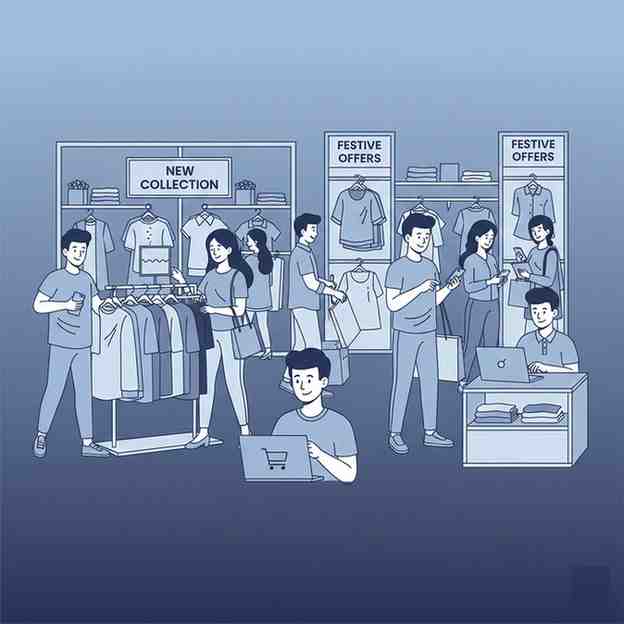
How Fast Fashion and Value Retail Trends Are Shaping Apparel Stocks in India
How Fast Fashion and Value Retail Trends Are Shaping Apparel Stocks in India
Walk into any mall in Mumbai or scroll through a fashion app in Delhi, and one thing becomes clear: the way India shops for clothes is changing. Collections refresh faster, discounts are more frequent, and consumers are increasingly comfortable mixing aspirational brands with budget-friendly purchases.
Thank you for reading this post, don't forget to subscribe!For retail investors tracking the Indian apparel sector stock performance, these behavioural shifts are not just lifestyle trends—they are structural signals. The rise of organised retail, digital discovery, and price-sensitive consumption is gradually influencing how apparel companies report growth, manage inventory, and protect margins.
In this article, we explore how fast fashion trends in India and value retail growth in India are influencing listed apparel companies. The goal is to provide an analytical perspective—not stock recommendations—so investors can better understand sector-level dynamics.
Best Retail Stocks in India
Understanding Fast Fashion Trends in India
Fast fashion is no longer limited to Western markets. In India, urbanisation, social media exposure, and expanding disposable incomes have accelerated demand for trend-responsive clothing. Consumers are more comfortable experimenting with styles, and shorter fashion cycles are becoming common across metros and Tier-II cities.
Brands that operate on fast inventory turnover models typically focus on:
- Short design-to-shelf timelines
- Data-driven demand forecasting
- Frequent collection launches
- Aggressive discounting strategies
These fast fashion trends in India are influencing how companies structure supply chains. Retailers that can compress production cycles and align inventory with demand patterns tend to manage working capital more efficiently.
Faster movement of stock reduces holding costs but also increases execution risk. If trends shift unexpectedly, companies may face margin pressure due to discount-led liquidation.
The Economics Behind Value Retail Growth in India
Parallel to fast fashion, another structural shift is underway: value retail expansion.
Value retail growth in India has been driven by:
- Aspirational consumption in smaller cities
- Organised players replacing unorganised local markets
- Expansion of mall culture and high-street retail
- Rising preference for branded but affordable clothing
Value retail formats focus on scale, supply chain efficiency, and competitive pricing. For listed companies operating in this segment, revenue growth often comes from aggressive store additions and deeper penetration into Tier-II and Tier-III markets.
However, investors evaluating apparel sector stocks must balance growth visibility with operating margin trends. Value retail models typically operate on thinner margins compared to premium formats. The sustainability of growth depends on cost control, store productivity, and inventory management.
As store networks expand, fixed costs get distributed over larger revenue bases. If executed well, profitability may improve over time. If demand softens, fixed costs can weigh on earnings.
Impact of Fast Fashion on Apparel Stocks
The impact of fast fashion on apparel stocks is multi-dimensional. It influences revenue growth, working capital cycles, branding investments, and competitive intensity.
Here are a few structural considerations:
1. Inventory Risk and Margin Sensitivity
Fast fashion reduces the risk of outdated styles if demand forecasting is accurate. However, errors in trend prediction can result in excess inventory and markdowns, affecting quarterly earnings.
2. Marketing and Brand Spend
With increasing digital competition, brands often allocate higher budgets to online marketing and influencer collaborations. While this drives brand recall, it also affects cost structures.
3. E-commerce Integration
Many apparel companies now operate hybrid models—physical stores plus online platforms. Investors assessing Indian apparel sector stock performance often track digital revenue contribution and omnichannel capabilities.
4. Competitive Intensity
Domestic brands compete not only with each other but also with global fast fashion players. Pricing power becomes crucial in sustaining profitability.
From a stock market perspective, companies that demonstrate consistent revenue growth alongside stable margins often attract institutional attention. However, valuation multiples in retail sectors can be sensitive to quarterly earnings surprises.
Tier-II and Tier-III Markets: A Structural Driver
Another dimension shaping apparel stocks in India is geographic expansion.
As disposable incomes rise beyond metro cities, organised apparel retailers are expanding aggressively. Smaller cities offer:
- Lower rental costs compared to metros
- Growing mall infrastructure
- A shift from unbranded to branded purchases
For investors analysing long-term trends, this expansion provides visibility into store rollout pipelines. However, store expansion requires capital expenditure, which can affect near-term return ratios.
While new stores drive topline expansion, same-store growth indicates demand consistency.
Consumer Behaviour: Aspirational Yet Price-Sensitive
Indian consumers today are aspirational but remain price-conscious. They may purchase a fast fashion item one month and a value retail product the next.
This hybrid behaviour has implications for stock analysis:
- Premium brands may face volume pressure during inflationary periods.
- Value retailers may gain traction when consumers trade down.
- Fast fashion brands must continuously innovate to retain loyalty.
Macroeconomic factors—such as inflation, rural income trends, and consumer sentiment—often influence short-term volatility in apparel stocks.
For those evaluating Indian apparel sector stock performance, it is important to contextualise earnings within broader consumption cycles.
Key Financial Metrics Retail Investors Should Track
Instead of focusing on short-term price movements, retail investors evaluating apparel stocks in India may consider tracking:
- Revenue growth consistency
- Gross margin stability
- Inventory turnover ratio
- Debt-to-equity levels
- Store addition pipeline
- Same-store sales growth
These metrics provide insight into operational efficiency and sustainability of growth.
Sector analysis, competitive positioning, and financial health assessment are essential components of informed decision-making.
The Role of Valuations in Apparel Stocks
Retail and apparel companies often trade at earnings multiples influenced by growth expectations. Fast expansion in store count or digital channels may justify higher valuations, provided earnings visibility remains intact.
However, investors should remain mindful that consumer-facing sectors can be cyclical. Demand fluctuations, seasonal trends, and festival-driven sales can influence quarterly performance.
Understanding the difference between structural growth (long-term expansion of organised retail) and cyclical growth (short-term demand spikes) helps investors interpret earnings results more objectively.
Fast Fashion vs Value Retail: Complementary, Not Competing
It is tempting to view fast fashion and value retail as competing segments. In reality, both can coexist and expand simultaneously.
Fast fashion addresses trend-driven, urban consumption.
Value retail caters to price-sensitive, scale-driven demand.
For the stock market, this means different business models may respond differently to economic cycles. A diversified exposure across sub-segments—subject to individual risk assessment—may help investors balance volatility.
This is not investment advice but a structural observation based on sectoral trends.
Conclusion
The Indian apparel market is undergoing structural evolution. Fast fashion trends in India are reshaping supply chains and marketing strategies. At the same time, value retail growth in India is expanding organised retail penetration across cities.
The impact of fast fashion on apparel stocks is visible in inventory cycles, margin profiles, and competitive positioning. Meanwhile, long-term Indian apparel sector stock performance will likely depend on operational discipline, consumer demand stability, and capital allocation strategies.
For retail investors, understanding these structural drivers is often more valuable than reacting to short-term volatility. Sectoral awareness, financial analysis, and a disciplined investment framework can help in making informed decisions aligned with individual risk tolerance and financial goals.
Related Blogs:
Best Retails Stocks in India
Top 5 Textile Stocks in India
Best Textile Stocks in India
Top 5 Footwear Stocks in India
Best Footwear Stocks in India
Best Jewellery Stocks in India
Top 5 Cosmetic Stocks in India
Disclaimer: This blog post is for informational purposes only and should not be considered financial advice. The financial data presented is subject to change, and the securities mentioned are examples only and do not constitute investment recommendations. Always conduct thorough research and consult a qualified financial advisor before making investment decisions.
How do fast fashion trends in India affect apparel companies?
Fast fashion influences inventory cycles, product launch frequency, and marketing spend, which can impact margins and earnings consistency.
Is value retail growth in India positive for apparel stocks?
Value retail expansion can support revenue growth through store additions and market penetration, though margin management remains crucial.
What factors influence Indian apparel sector stock performance?
Revenue growth, same-store sales, inventory turnover, cost control, and broader consumer demand trends are key drivers.
Are apparel stocks cyclical?
Consumer demand patterns and economic conditions can introduce cyclical volatility in earnings and stock prices.
