

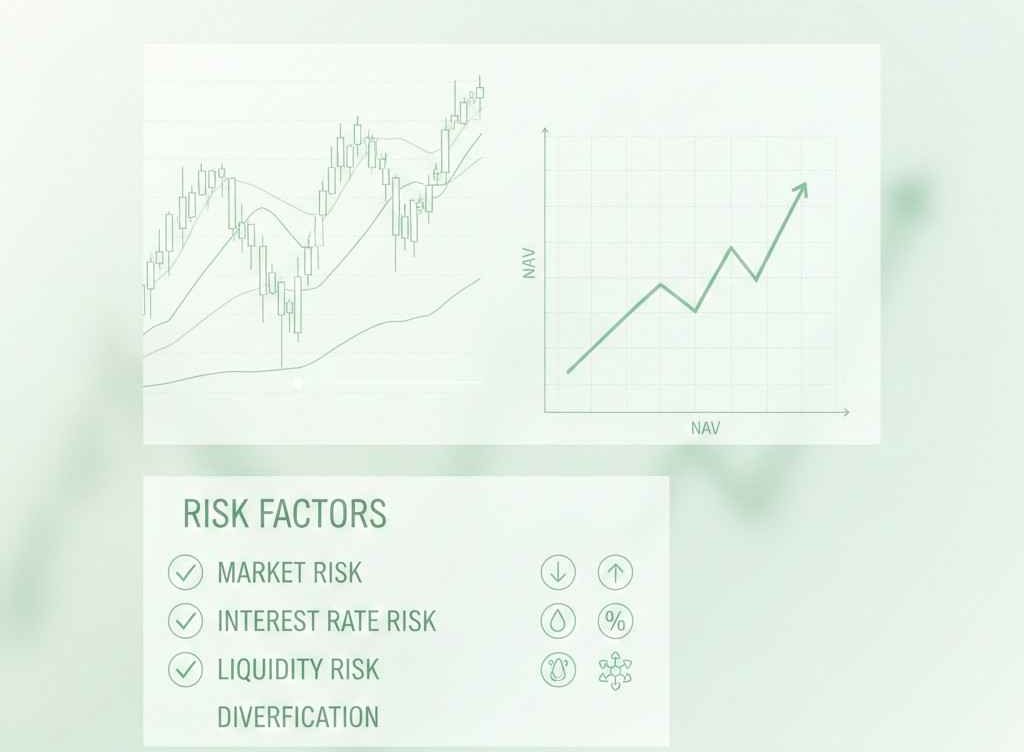
Risk Factors in Open-Ended Mutual Funds and How to Manage Them
Risk Factors in Open-Ended Mutual Funds and How to Manage Them
Open-ended mutual funds are often seen as a flexible and accessible investment option, especially for Indian investors looking to build wealth over time. These funds allow investors to buy and redeem units at any time at the prevailing Net Asset Value (NAV), which makes them convenient for both new and experienced participants. However, flexibility does not mean the absence of risk. Like all market-linked products, open-ended mutual funds carry certain risk factors that investors should clearly understand before investing.
Thank you for reading this post, don't forget to subscribe!This blog explains the key risk factors in open-ended mutual funds and outlines practical ways to manage them, keeping in mind the realities of the Indian market and the expectations of informed investors.
Understanding Open-Ended Mutual Funds
Before diving into the risks, it helps to briefly revisit how open-ended funds work. These mutual funds do not have a fixed maturity period. Fund houses continuously issue new units and redeem existing ones based on investor demand. The fund’s performance depends on the underlying securities, which may include equities, debt instruments, or a mix of both.
Because the portfolio value fluctuates with market movements, investors are exposed to different types of risks depending on the fund category and market conditions.
Key Risk Factors in Open-Ended Mutual Funds
- Market Risk
Market risk is one of the most widely discussed risk factors in open-ended mutual funds. It refers to the possibility of losses due to changes in market conditions such as economic slowdowns, inflation, interest rate movements, or geopolitical events.
Equity-oriented open-ended funds are particularly sensitive to stock market volatility, while debt-oriented funds may react to interest rate changes. Market risk cannot be eliminated, but it can be managed with a thoughtful investment approach.
- Liquidity Risk
Although open-ended funds are designed to offer liquidity, certain situations can still pose challenges. Liquidity risk arises when the fund holds securities that are difficult to sell quickly without impacting their price. This is more common in debt funds that invest in lower-rated corporate bonds or money market instruments with limited trading volumes.
During periods of market stress, redemption pressure can increase, making it harder for the fund manager to meet payout requests smoothly. This is one of the less visible open-ended mutual fund investment risks that investors should not ignore.
- Credit Risk
Credit risk is mainly associated with debt-oriented open-ended mutual funds. It refers to the possibility that the issuer of a bond or debt instrument may fail to pay interest or repay the principal on time.
Funds that invest in lower-rated instruments often offer higher yields, but they also carry higher credit risk. For Indian investors, understanding the credit quality of a debt fund’s portfolio is an important step in evaluating the risks of investing in open-ended mutual funds.
- Interest Rate Risk
Interest rate risk affects debt mutual funds when there are changes in prevailing interest rates. When interest rates rise, the prices of existing bonds generally fall, leading to a decline in the fund’s NAV. Conversely, falling interest rates may support bond prices.
Longer-duration debt funds are typically more sensitive to interest rate movements than short-duration or liquid funds. This risk becomes particularly relevant in an environment where monetary policy decisions by the Reserve Bank of India influence market rates.
- Fund Manager Risk
Open-ended mutual funds are actively managed, which means the fund manager plays a key role in investment decisions. Fund manager risk arises when the chosen strategy does not perform as expected due to incorrect stock selection, timing decisions, or changes in management.
While fund houses follow structured investment processes, outcomes can still vary. Investors should be aware that past performance does not always reflect future results.
- Expense Ratio Impact
Although not a direct market risk, expense ratios influence net returns over time. Open-ended funds charge management fees and operational expenses, which are deducted from the NAV. Higher expense ratios can reduce long-term returns, especially in periods of moderate market performance.
Understanding cost structures is an often-overlooked aspect of evaluating open-ended mutual fund investment risks.
How to Manage Mutual Fund Risks Effectively
While risks cannot be entirely removed, there are several ways to reduce risk in mutual funds through informed decision-making and disciplined investing.
- Choose Funds Based on Financial Goals
One of the most effective ways to manage mutual fund risks is to align fund selection with specific financial goals. Short-term goals are generally better suited to low-duration debt or liquid funds, while long-term goals may tolerate equity exposure.
This alignment helps ensure that market volatility does not force premature withdrawals that could result in losses.
- Diversify Across Fund Categories
Diversification plays a significant role in risk management. Instead of investing in a single fund or category, spreading investments across equity, debt, and hybrid open-ended mutual funds can help balance risk and return.
Within equity funds, diversification across market capitalisations and sectors can further reduce the impact of sharp movements in a single segment of the market.
- Pay Attention to Portfolio Quality
For debt funds, reviewing the credit quality and maturity profile of the portfolio is essential. Funds with a higher allocation to well-rated instruments may offer relatively stable outcomes, even if returns are moderate.
For equity funds, understanding sector exposure and stock concentration helps assess how the fund might react to market changes.
- Use Systematic Investment Plans (SIPs)
Systematic Investment Plans are a commonly used tool in India to manage market-related risks. By investing a fixed amount at regular intervals, SIPs help average out the purchase cost over time.
This approach reduces the impact of short-term market fluctuations and supports disciplined investing, particularly in equity-oriented open-ended funds.
- Review Performance Periodically
Regular portfolio reviews are an important part of managing risks of investing in open-ended mutual funds. Reviewing performance against benchmarks and peer funds helps identify whether a fund continues to meet expectations.
However, frequent changes based on short-term underperformance should be avoided, as they may disrupt long-term investment plans.
- Understand Your Risk Tolerance
Every investor has a different capacity to handle volatility. Understanding personal risk tolerance before selecting open-ended funds ensures that investment decisions remain comfortable even during market downturns.
This self-assessment is a practical step toward managing emotional reactions, which can otherwise amplify perceived risks.
Conclusion
Open-ended mutual funds offer flexibility, transparency, and access to a wide range of asset classes, making them a widely used investment option in India. At the same time, they come with distinct risk factors that require attention and understanding.
By recognising the key risk factors in open-ended mutual funds and applying suitable strategies to manage them, investors can make more informed choices. A balanced approach that combines goal-based planning, diversification, cost awareness, and periodic review can help navigate market uncertainties with greater clarity and confidence.
For investors willing to stay informed and disciplined, understanding how to manage mutual fund risks is not just about avoiding losses—it is about creating a structured path toward long-term financial stability.
Related Blogs:
Momentum Funds for Beginners: Factors to Consider Before You Start
What are Closed-Ended Mutual Funds?
Lump Sum Investments – How Is It Different from an SIP?
What Are Open Ended Mutual Funds?
What is Reversal Trading?
What Is an Auction Market and How Does It Work?
Understanding Mutual Fund SIP Returns: How to Calculate and Maximize Your Earnings
SIP Calculator and Inflation: Understanding How Inflation Impacts Your Mutual Fund Returns
SIP vs. Lumpsum: What’s the Best Way to Invest in Mutual Funds for Retirement?
How to Use a SIP Calculator for Investment Planning?
Reach Your Financial Milestones Sooner with Step-Up SIPs
What is a SIP Calculator and How Can It Help?
SIP vs Lump Sum: Which Investment Strategy Is Better?
Why Smart Investors in India are Choosing Systematic Investment Plan (SIPs)
How to Start a SIP for Your Child’s Education or Future Goals
The Power of SIPs: Why Consistency Beats Timing the Market
Disclaimer: This blog post is intended for informational purposes only and should not be considered financial advice. The financial data presented is subject to change over time, and the securities mentioned are examples only and do not constitute investment recommendations. Always conduct thorough research and consult with a qualified financial advisor before making any investment decisions.
