

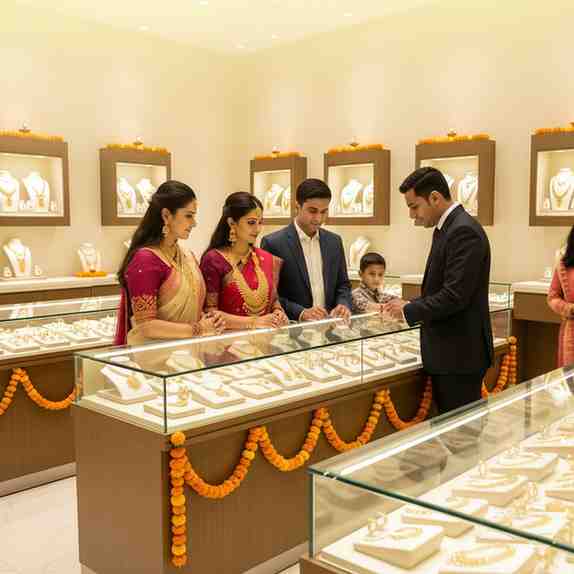
Occasion-Based Spending Trends and Their Role in Jewellery Stocks
Occasion-Based Spending Trends and Their Role in Jewellery Stocks
India’s jewellery market is deeply intertwined with culture, tradition, and seasonal consumption patterns. Unlike many other retail segments that depend primarily on discretionary demand cycles, jewellery purchases in India are strongly linked to weddings, festivals, and family milestones. For equity investors, understanding occasion-based jewellery buying trends can provide useful context when analysing the performance and earnings visibility of listed jewellery companies.
Thank you for reading this post, don't forget to subscribe!This article examines how event-driven consumption influences the sector, what retail investors should watch, and how these patterns function as key jewellery stocks demand drivers in India.
Why Occasion-Based Demand Matters in the Jewellery Industry
In India, jewellery is not merely ornamental—it often carries social, cultural, and sometimes financial significance. Purchases tend to cluster around specific occasions such as:
- Wedding seasons
- Major festivals (Diwali, Akshaya Tritiya, Dhanteras)
- Regional celebrations
- Family milestones
Because of this behaviour, revenue visibility for jewellers is often uneven across quarters. Investors who track occasion-based jewellery buying trends may better understand why certain quarters consistently outperform others.
From a business standpoint, jewellery retailers plan inventory, marketing campaigns, and store expansions around these predictable consumption windows. This makes seasonal demand analysis a relevant input while evaluating sector growth patterns.
Wedding Season: A Structural Demand Engine
One of the most significant contributors to jewellery consumption in India is the wedding market. Industry estimates have long suggested that weddings account for a large share of gold jewellery demand in the country.
How the Wedding Cycle Influences Sales
The wedding season jewellery sales in India typically peak during:
- October–December
- January–March
- Select regional auspicious dates throughout the year
During these periods, jewellers often report:
- Higher footfall in stores
- Increased ticket sizes
- Strong studded jewellery demand
- Better inventory turnover
For investors analysing quarterly earnings, comparing results with the wedding calendar can provide important context. A relatively soft quarter outside peak wedding months may not necessarily indicate structural weakness.
Changing Consumer Behaviour
Urban consumers are gradually shifting toward:
- Lightweight and daily-wear jewellery
- Diamond and studded pieces
- Branded jewellery purchases
- Digital discovery before store visits
These changes influence product mix and margins, which in turn affect listed jewellery companies’ financial performance.
Festivals as Short-Term Demand Catalysts
Beyond weddings, festivals play a measurable role in driving jewellery purchases. Events such as Diwali, Dhanteras, and Akshaya Tritiya often see a spike in gold buying due to cultural beliefs around auspicious purchases.
Impact of Festive Demand on Jewellery Stocks
The impact of festive demand on jewellery stocks is usually visible in:
- Quarterly revenue momentum
- Same-store sales growth
- Management commentary during earnings calls
- Inventory build-up ahead of festive quarters
However, it is important to note that stock price movements may not always align immediately with festive sales. Markets often price in expectations well in advance.
Retail investors should therefore avoid assuming a direct one-to-one relationship between festival demand and short-term stock performance.
How Festivals Affect Jewellery Sector Growth
Over longer periods, repeated festive buying contributes to structural industry growth. Understanding how festivals affect jewellery sector growth requires looking beyond one quarter and focusing on broader trends.
Key Structural Drivers
- Formalisation of the jewellery market
The shift from unorganised to organised players continues to benefit listed companies. - Rising disposable incomes
Higher household incomes support discretionary purchases during festivals. - Trust in branded jewellers
Consumers increasingly prefer hallmark-certified and branded products. - Expansion into Tier 2 and Tier 3 cities
Organised jewellers are expanding their footprint beyond metros.
Together, these factors amplify the seasonal demand created by festivals and weddings.
Long-Term Jewellery Stocks Demand Drivers in India
While occasion-based demand is important, investors should evaluate jewellery companies using a broader framework. Key jewellery stocks demand drivers in India include:
- Gold Price Trends
Gold prices influence both consumer behaviour and company margins. Typically:
- Sharp price rises may temporarily slow volumes
- Price corrections can stimulate buying
- Volatility affects inventory management
Investors should track gold price movements alongside company commentary.
Best Gold Stocks in India
- Organised Market Penetration
India’s jewellery market has historically been fragmented. The gradual shift toward organised retail continues to support growth for listed players through:
- Brand trust
- Standardised pricing
- Better financing options
- Omnichannel presence
- Product Mix Evolution
Higher contribution from:
- Studded jewellery
- Diamonds
- Lightweight designs
can support margin expansion for companies.
- Store Expansion Strategy
Consistent store additions in high-potential regions often signal management confidence and long-term growth planning.
Risks Investors Should Keep in Mind
Even though occasion-driven demand provides visibility, jewellery stocks are not without risks. Retail investors should remain aware of the following factors:
Demand Volatility
Macroeconomic uncertainty, rural income fluctuations, or weak consumer sentiment can affect festive and wedding purchases.
Gold Price Shock
Sudden spikes in gold prices can defer consumer buying decisions in the short term.
Regulatory Changes
Changes in import duties, hallmarking norms, or taxation can influence industry dynamics.
Inventory and Working Capital Pressure
Jewellery businesses are inherently working-capital intensive. Investors should monitor:
- Inventory turnover
- Debt levels
- Cash conversion cycle
Practical Approach to Analysing Jewellery Stocks
Instead of focusing only on seasonal spikes, investors may consider a more structured evaluation framework:
- Compare year-on-year quarterly growth rather than sequential numbers
- Track same-store sales growth disclosed by companies
- Read management commentary on festive demand
- Monitor store expansion pipeline
- Observe studded jewellery contribution trends
- Review balance sheet strength and debt levels
This approach helps separate structural growth from temporary demand surges.
Conclusion
Occasion-driven consumption remains a defining characteristic of India’s jewellery market. Weddings and festivals continue to shape quarterly sales patterns and influence investor sentiment. However, while occasion-based jewellery buying trends and festive demand provide useful signals, they should not be viewed in isolation.
For retail investors, the more effective approach is to combine seasonal insights with deeper fundamental analysis—covering margins, expansion strategy, balance sheet strength, and long-term industry formalisation.
Jewellery stocks can reflect both cultural consumption patterns and evolving retail dynamics. Understanding this intersection can help investors interpret earnings cycles more accurately while staying aligned with their overall investment strategy.
Related Blogs:
Best Gold Stocks in India
Top Silver Stocks in India
Best Silver Stocks in India
Impact of Global Commodity Prices on Indian Gold and Silver ETFs
What are Closed-Ended Mutual Funds?
Lump Sum Investments – How Is It Different from an SIP?
What Are Open Ended Mutual Funds?
What is Reversal Trading?
What Is an Auction Market and How Does It Work?
Understanding Mutual Fund SIP Returns: How to Calculate and Maximize Your Earnings
SIP Calculator and Inflation: Understanding How Inflation Impacts Your Mutual Fund Returns
SIP vs. Lumpsum: What’s the Best Way to Invest in Mutual Funds for Retirement?
How to Use a SIP Calculator for Investment Planning?
Reach Your Financial Milestones Sooner with Step-Up SIPs
What is a SIP Calculator and How Can It Help?
SIP vs Lump Sum: Which Investment Strategy Is Better?
Why Smart Investors in India are Choosing Systematic Investment Plan (SIPs)
How to Start a SIP for Your Child’s Education or Future Goals
The Power of SIPs: Why Consistency Beats Timing the Market
Disclaimer: This blog post is intended for informational purposes only and should not be considered financial advice. The financial data presented is subject to change over time, and the securities mentioned are examples only and do not constitute investment recommendations. Always conduct thorough research and consult with a qualified financial advisor before making any investment decisions.
Do jewellery stocks always rise during the wedding season in India?
Not necessarily. While wedding season jewellery sales in India may support company revenues, stock prices often factor in expectations in advance and may not move in tandem.
How significant is festive demand for jewellery companies?
The impact of festive demand on jewellery stocks is visible in quarterly sales momentum, but long-term performance depends on broader business fundamentals.
What are the main jewellery stocks demand drivers in India?
Key drivers include organised market growth, gold price trends, store expansion, product mix, and consumer income growth.
Should retail investors buy jewellery stocks before festivals?
Investment decisions should be based on thorough research, risk assessment, and financial goals rather than seasonal assumptions alone.
