

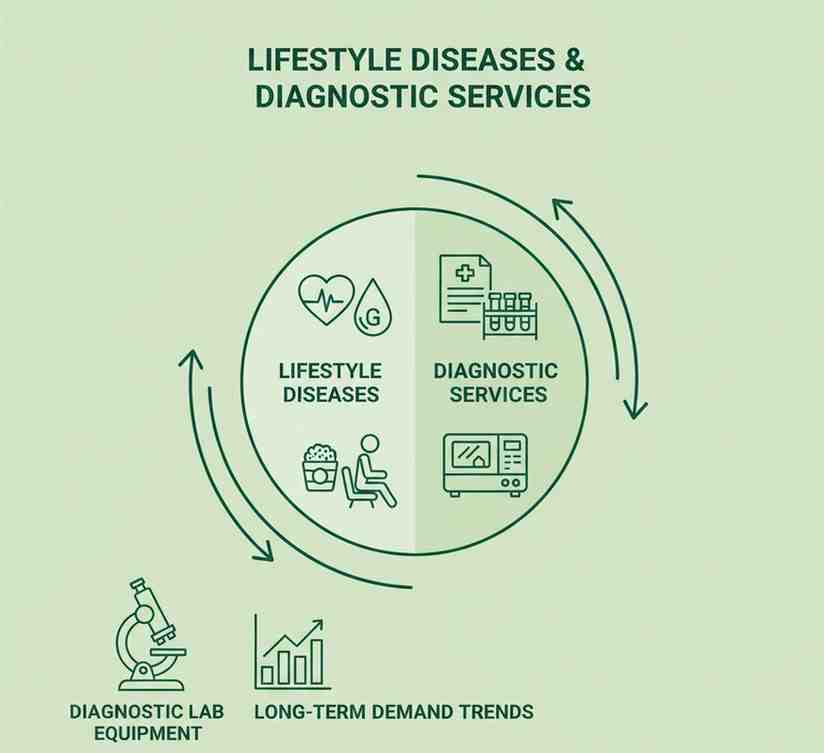
The Impact of Lifestyle Diseases on Diagnostic Service Stocks
The Impact of Lifestyle Diseases on Diagnostic Service Stocks
Over the last two decades, India’s healthcare landscape has been quietly but steadily changing. Infectious diseases, once the dominant concern, are no longer the sole focus of the medical system. Instead, lifestyle-related conditions such as diabetes, cardiovascular disorders, obesity, thyroid issues, and hypertension have become increasingly prevalent. This shift has had wide-ranging implications—not just for public health, but also for the business models of healthcare providers.
Thank you for reading this post, don't forget to subscribe!One segment that has felt this impact most directly is diagnostic services. Understanding the impact of lifestyle diseases on diagnostic service stocks requires looking beyond short-term market movements and examining how long-term health trends translate into sustained demand for testing and preventive care.
Understanding Lifestyle Diseases
Lifestyle diseases are typically chronic conditions linked to habits such as poor diet, sedentary behaviour, stress, and irregular sleep patterns. In India, rapid urbanisation, changing work environments, and evolving consumption patterns have contributed to a steady rise in such ailments.
From an economic perspective, lifestyle diseases differ from acute illnesses in one important way: they require ongoing monitoring rather than one-time treatment. Blood sugar tests, lipid profiles, cardiac markers, thyroid panels, and preventive health check-ups become recurring needs. This characteristic forms the foundation of how lifestyle diseases and healthcare stocks are connected.
Why Diagnostic Services Are Closely Linked to Lifestyle Diseases
Diagnostic services sit at the intersection of prevention, detection, and disease management. Unlike hospitals, which often see patients episodically, diagnostic centres tend to engage with individuals repeatedly over long periods.
As lifestyle diseases rise, diagnostics benefit in several ways:
- Increased frequency of routine testing
- Higher awareness of preventive health check-ups
- Demand from both doctors and self-referred patients
- Expansion of corporate and insurance-led health screening
This explains why analysts often track the impact of lifestyle diseases on diagnostic companies as a structural trend rather than a cyclical one.
Growth of Diagnostic Sector in India
The growth of the diagnostic sector in India cannot be attributed to lifestyle diseases alone, but they form a significant demand pillar. Other supportive factors include:
- Rising health awareness among urban and semi-urban populations
- Wider insurance coverage encouraging preventive testing
- Increased doctor reliance on data-driven diagnosis
- Expansion of organised diagnostic chains into Tier 2 and Tier 3 cities
Lifestyle diseases amplify these drivers by ensuring consistent utilisation of diagnostic services, rather than sporadic demand.
Lifestyle Diseases Driving Diagnostic Demand in India
| Lifestyle Disease | Common Diagnostic Tests | Typical Monitoring Frequency | Demand Impact on Diagnostics |
|---|---|---|---|
| Diabetes | Fasting Blood Sugar (FBS), HbA1c, Postprandial Glucose | Every 3–6 months (stable patients) | High repeat testing volume; strong recurring revenue visibility |
| Hypertension | Lipid Profile, Kidney Function Test (KFT), ECG | Every 6–12 months | Supports preventive packages and routine screening growth |
| Cardiovascular Disorders | Lipid Profile, Troponin, ECG, Echocardiography | Periodic + event-based | Mix of routine and specialised test demand |
| Thyroid Disorders | TSH, T3, T4 panels | Every 6–12 months | Steady chronic monitoring demand |
| Obesity & Metabolic Syndrome | Lipid Profile, HbA1c, Liver Function Test (LFT) | Annual to semi-annual | Drives bundled preventive health packages |
| Lifestyle-related Liver Issues | Liver Function Test (LFT), Ultrasound | Periodic monitoring | Supports growth in preventive diagnostics |
Diagnostic Service Stocks in India
From an investor’s standpoint, diagnostic service stocks in India operate on relatively asset-light and scalable models compared to hospitals. Their revenues are linked to test volumes, test mix, and network reach.
Lifestyle disease-related tests often fall into routine or semi-specialised categories, which means:
- Predictable demand patterns
- Higher repeat customer rates
- Lower dependency on emergency or seasonal cases
However, investors should note that pricing pressures, competition, and regulatory oversight can influence margins, even when demand trends remain favourable.
Healthcare Diagnostics Market Trends Shaped by Lifestyle Conditions
Several healthcare diagnostics market trends are directly or indirectly shaped by the rise of lifestyle diseases:
- Shift Towards Preventive Testing
Health check-up packages focused on metabolic, cardiac, and hormonal markers are increasingly common. This reflects a move from reactive to preventive healthcare.
- Technology and Automation
High test volumes for lifestyle-related parameters encourage investment in automated labs, digital reporting, and data analytics to improve efficiency.
- Home Sample Collection
Chronic patients often prefer convenience. This has led to the expansion of home collection services, particularly in urban markets.
- B2B and Corporate Health Programs
Employers increasingly offer periodic health screenings, driven partly by rising lifestyle-related absenteeism and insurance costs.
These trends collectively support long-term demand visibility for diagnostic services, although competitive dynamics remain important.
Impact on Financial Performance and Valuations
The impact of lifestyle diseases on diagnostic service stocks is not always immediately visible in stock prices. Instead, it tends to reflect gradually through:
- Stable revenue growth
- Consistent test volume expansion
- Improved operating leverage with scale
- Higher share of routine and preventive tests
At the same time, investors must factor in challenges such as pricing competition, cost of expansion, and sensitivity to regulatory changes related to healthcare affordability.
Key Considerations for Investors
While lifestyle disease trends provide a supportive backdrop, diagnostic service stocks should still be evaluated on fundamentals such as:
- Network expansion strategy
- Test mix and pricing discipline
- Operational efficiency
- Regulatory compliance
- Competitive positioning
Lifestyle diseases create demand, but execution determines outcomes.
Conclusion
The rise of lifestyle-related health conditions represents a structural shift in India’s healthcare needs. This shift has meaningful implications for diagnostic services, which play a central role in prevention, monitoring, and disease management.
For investors seeking to understand the impact of lifestyle diseases on diagnostic companies, the key lies in recognising diagnostics as a demand-driven service segment influenced by long-term health trends rather than short-term cycles. When viewed through this lens, diagnostic service stocks in India reflect broader changes in healthcare consumption—making them an important segment to study within the evolving healthcare ecosystem.
Related Blogs:
Why Your Investment Portfolio Should Consider Diagnostic Devices Stocks
Best Healthcare Stocks in India
How Pharma, Biotech, and Technology are Shaping Healthcare Investments in India
Diagnosis to Treatment: Investing in the Integrated Healthcare Value Chain in India
Top 5 Healthcare Stocks in India
Best Diagnostic Device Stocks in India
Top 5 Pharma Stocks in India
Top 5 Biotech Stocks in India
Best Diagnostic Device Stocks in India
The Rise of Point-of-Care Diagnostics: Impacts on Pharma, Biotech, and Investment Opportunities in India
Healthcare Investing: A Guide to Pharma, Biotech, and Related Stocks in India
Disclaimer: This blog post is intended for informational purposes only and should not be considered financial advice. The financial data presented is subject to change over time, and the securities mentioned are examples only and do not constitute investment recommendations. Always conduct thorough research and consult with a qualified financial advisor before making any investment decisions.
How do lifestyle diseases impact diagnostic service stocks?
Lifestyle diseases increase the frequency of routine and preventive testing, which supports consistent demand for diagnostic services over time.
Are diagnostic service stocks in India driven by structural demand?
Yes, rising health awareness, preventive care adoption, and the growing prevalence of lifestyle diseases contribute to structural demand for diagnostics.
What risks should investors consider in diagnostic service stocks?
Investors should consider factors such as pricing pressure, competition, regulatory changes, and execution efficiency, alongside demand trends.
