

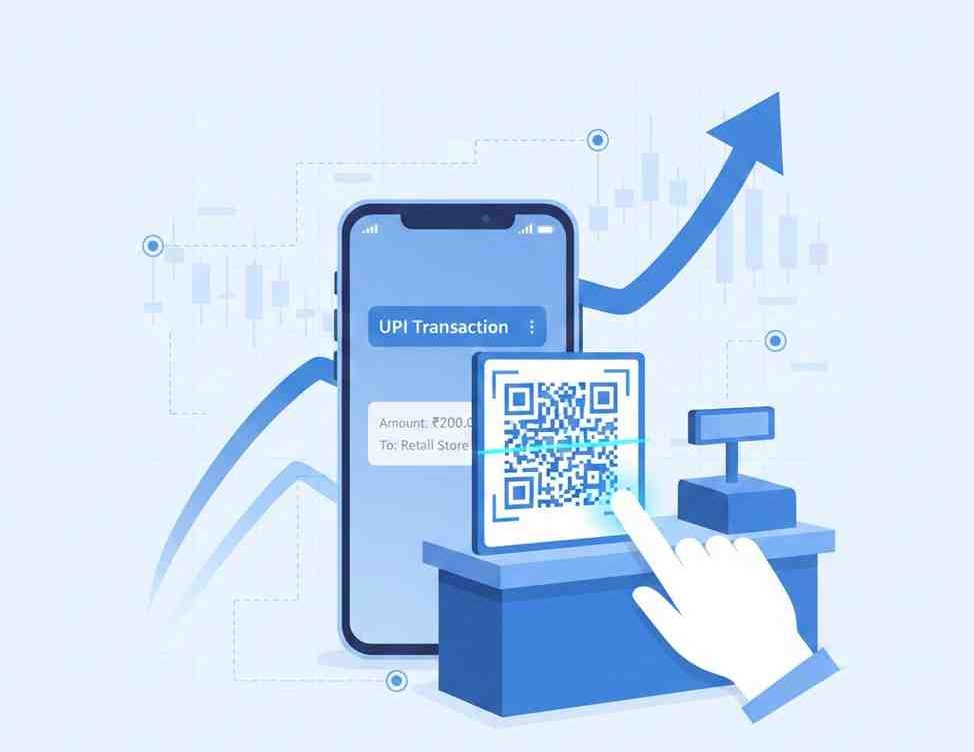
The Rise of Digital Payments and Its Influence on Fintech-Linked Stocks
The Rise of Digital Payments and Its Influence on Fintech-Linked Stocks
Over the past decade, India’s financial ecosystem has undergone a structural transformation. Cash transactions, once dominant across urban and rural markets, are steadily being replaced by QR codes, mobile wallets, UPI transfers, and embedded financial services.
Thank you for reading this post, don't forget to subscribe!This shift is not merely technological. It reflects changing consumer behaviour, deeper financial inclusion, and expanding participation in formal financial systems. As digital transactions scale, investors are increasingly examining how this transformation influences companies operating within the broader financial technology ecosystem.
For retail investors seeking clarity, it is important to distinguish between long-term structural trends and short-term stock price movements. Understanding how digital transaction growth translates into business performance can provide useful context before making investment decisions.
Understanding India’s Digital Payments Expansion
India’s transition toward digital transactions has been driven by several structural factors:
- Unified Payments Interface (UPI) adoption
- Increased smartphone penetration
- Affordable data access
- Government-led financial inclusion initiatives
- Rapid expansion of digital banking infrastructure
UPI volumes have expanded significantly, making India one of the largest real-time payment ecosystems globally. Beyond peer-to-peer transfers, digital payment infrastructure now supports:
- E-commerce transactions
- Utility bill payments
- Subscription services
- SME merchant payments
- Credit-linked payment solutions
Importantly, adoption is no longer limited to metropolitan areas. Tier-2 and tier-3 cities are increasingly participating in digital financial systems, expanding the overall addressable market for technology-enabled financial services.
How Digital Transaction Growth Converts Into Revenue
High transaction volumes alone do not guarantee profitability. Investors must understand how platforms monetise their ecosystems.
Revenue streams in the digital financial space typically include:
- Merchant service fees (where applicable)
- Subscription-based business services
- Cross-selling of credit products
- Wealth and insurance distribution
- Lending partnerships
- Data-driven underwriting models
As transaction volumes grow, companies often attempt to layer additional services onto their platforms. This embedded finance approach enables cross-selling and deeper customer engagement. However, revenue scalability depends on competitive intensity, pricing frameworks, regulatory policies, and operational efficiency.
Therefore, evaluating the sustainability of business models becomes critical.
Influence on Listed Fintech Companies
The expansion of digital payments influences listed financial technology companies in multiple ways.
- Revenue Visibility and Operating Leverage
When transaction volumes rise steadily, companies with scalable infrastructure may experience improved operating leverage. Once fixed costs stabilise, incremental transactions can contribute positively to margins, subject to their revenue model.
- Valuation Sensitivity
Technology-oriented financial companies are often valued based on projected growth rather than current earnings alone. As a result, changes in transaction growth rates, regulatory updates, or revised profitability timelines can lead to noticeable stock price volatility.
Market participants frequently adjust expectations based on earnings commentary, forward guidance, and capital allocation decisions.
- Broader Market Sentiment
Technology-driven sectors often attract investor attention during periods of economic optimism. However, sentiment cycles can shift quickly if earnings delivery does not align with growth projections. Investors should therefore evaluate fundamentals rather than relying solely on thematic narratives.
The Broader Digital Financial Ecosystem
When discussing companies linked to digital transactions, it is important to look beyond app-based payment platforms.
The ecosystem includes:
- Payment processing infrastructure providers
- Banking technology service companies
- Card network facilitators
- Digital-first lending institutions
- Non-banking financial companies with technology integration
- Cybersecurity service providers
Increased transaction activity benefits multiple layers of this ecosystem. For example:
- Merchant onboarding can increase demand for working capital financing.
- Higher transaction volumes can drive demand for fraud detection solutions.
- Growth in digital commerce can support ancillary financial service providers.
Therefore, exposure to this theme can take different forms across sectors.
Sector Cycles and Market Behaviour
Technology-led financial sectors typically move through identifiable phases:
- Adoption and user acquisition
- Rapid scaling
- Focus on profitability
- Consolidation and operational efficiency
During early phases, markets may reward user growth and transaction expansion. Over time, the emphasis shifts toward sustainable margins, cost control, capital efficiency, and regulatory compliance.
Retail investors should examine:
- Revenue diversification
- Unit economics
- Customer acquisition costs
- Cash flow stability
- Competitive positioning
Stock prices may reflect expectations well in advance of financial results. Therefore, disciplined analysis remains important.
Structural Drivers Supporting Continued Expansion
Several long-term drivers continue to support digital financial adoption in India:
- Formalisation of the economy
- Increased traceability of transactions
- Expansion of digital lending
- E-commerce penetration
- Government digitisation initiatives
- Financial inclusion in semi-urban and rural areas
These structural factors provide an enabling environment for continued sector development. However, growth rates may moderate as the ecosystem matures.
Investors should assess whether companies are building durable advantages such as:
- Strong merchant networks
- Integrated product offerings
- Proprietary technology infrastructure
- Strategic partnerships with financial institutions
Durability often determines long-term performance.
Key Risks and Regulatory Considerations
Digital financial services operate within a regulated environment. Important risks include:
- Regulatory changes affecting pricing structures
- Data protection and privacy requirements
- Cybersecurity vulnerabilities
- Competitive pressures
- Dependence on ecosystem partnerships
Policy changes can alter revenue models, particularly in areas such as transaction pricing and lending practices. Investors must monitor regulatory developments and quarterly disclosures carefully.
What Investors May Consider
When evaluating companies linked to digital financial infrastructure, investors may review:
- Earnings growth consistency
- Cost management discipline
- Credit exposure (where lending is involved)
- Capital adequacy
- Management track record
- Transparency in disclosures
Industry growth provides opportunity, but individual company outcomes depend on execution quality and financial prudence.
Conclusion
India’s transition toward digital transactions represents a structural shift in how individuals and businesses engage with financial systems. This transformation has implications for listed companies and fintech stocks operating within payment infrastructure, digital lending, and financial technology services.
While sector growth provides a supportive backdrop, equity performance ultimately depends on fundamentals, governance standards, regulatory compliance, and capital discipline.
For retail investors, understanding the broader ecosystem and assessing risk factors objectively can support more informed decision-making. As with any sector, aligning investments with individual financial goals and risk tolerance remains essential.
Related Blogs:
Indian Fintech Stocks: Evaluating Long-Term Growth Opportunities
Fintech Investment Opportunities in India: Key Stocks to Watch
Evaluating Long-Term Prospects of Fintech Stocks in India
Fintech Stocks vs. Traditional Bank Stocks: Key Differences for Investors
How UPI Growth Influences Fintech Companies Listed in Indian Markets
IPO Basics: What You Must Know Before You Invest
IPO Watch: Upcoming Listings to Track in 2025
The Rise of Small Finance Banks: Investment Opportunities
How Digital Lending Is Driving Demand for Fintech Stocks in India
Portfolio Diversification with Fintech Stocks in India: What Investors Should Know
Top Stocks Benefiting from India’s Digital Revolution
Top NBFC Non-Banking Financial Companies Stocks to Invest in India for 2025
Invest in the Future: Top Small-Cap Bank Stocks in India for 2025
Top 5 Fintech Stocks in India
What Makes a Small-Cap Bank Stock a Good Investment?
Understanding Small-Cap Bank Fundamentals: A Guide for Indian Investors
How Digitalization is Transforming Small-Cap Banking in India
Top 5 Finance Stocks in India
Disclaimer: This blog post is intended for informational purposes only and should not be considered financial advice. The financial data presented is subject to change over time, and the securities mentioned are examples only and do not constitute investment recommendations. Always conduct thorough research and consult with a qualified financial advisor before making any investment decisions.
How has digital payment adoption changed the Indian financial ecosystem?
Digital payment adoption has increased transaction transparency, expanded financial inclusion, and supported the formalisation of the economy. It has also enabled new business models in lending, wealth management, and merchant services.
How do digital payments influence fintech-linked stocks?
Growth in transaction volumes can improve revenue visibility and scalability for companies operating in payment processing, digital lending, and financial infrastructure. However, stock performance depends on profitability, regulation, and competitive dynamics.
Are fintech stocks suitable for long-term investors?
Suitability depends on individual risk tolerance, investment horizon, and financial goals. Fintech businesses may offer growth exposure but can also experience earnings volatility and regulatory risk.
What risks should investors consider before investing in fintech companies?
Key risks include regulatory changes, cybersecurity concerns, pricing pressures, capital requirements, and execution challenges in scaling business models.
Does growth in UPI transactions directly increase stock prices?
Higher transaction volumes may support sector growth, but stock prices are influenced by company-specific earnings performance, valuation expectations, and broader market conditions.
