

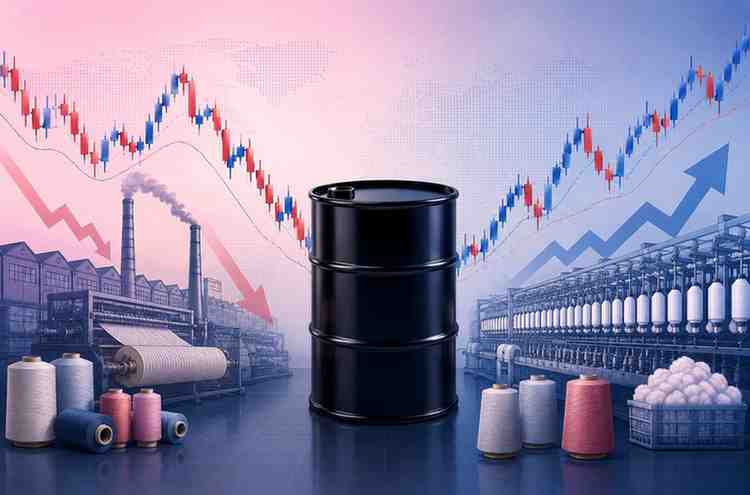
How Long-Term Crude Oil Price Trends Impact Textile Stocks
How Long-Term Crude Oil Price Trends Impact Textile Industry Stocks
The textile industry is closely linked to several global economic factors, and crude oil prices are among the most important of them. For investors tracking textile stocks in India, understanding the connection between crude oil and textile manufacturing costs can provide useful insights into company performance, operating margins, and long-term market trends.
Thank you for reading this post, don't forget to subscribe!While textile companies are often associated with cotton, fabrics, garments, and exports, many investors overlook how deeply the sector is connected to petroleum-based inputs, transportation costs, and energy consumption. This is why the crude oil price impact on textile stocks becomes an important consideration for long-term investors evaluating textile companies.
In this article, we will explore how long-term crude oil trends influence textile businesses, profitability, and stock market performance in the Indian context.
Why Crude Oil Matters to the Textile Industry
At first glance, crude oil and textiles may appear unrelated. However, oil plays a significant role across the textile value chain.
Many textile products use synthetic fibres such as polyester, nylon, acrylic, and viscose blends. Polyester, in particular, is derived from petrochemicals that originate from crude oil refining. As a result, fluctuations in oil prices can directly affect raw material costs for textile manufacturers.
Apart from raw materials, oil prices also influence:
- Transportation and logistics expenses
- Power and fuel costs
- Packaging material prices
- Export competitiveness
- Manufacturing margins
This explains why investors often study the relationship between textile stocks in India and oil prices when assessing sector performance.
How Oil Prices Affect Textile Companies
The impact of oil prices on textile companies depends on the business model of the company and the type of products it manufactures.
- Synthetic Fibre Manufacturers
Companies producing polyester yarn, synthetic fabrics, or petrochemical-based textile inputs are usually more sensitive to crude oil movements.
When crude oil prices rise over a prolonged period:
- Petrochemical feedstock costs may increase
- Production expenses can rise
- Profit margins may come under pressure if companies cannot pass on costs to consumers
On the other hand, when oil prices remain stable or decline:
- Input costs may ease
- Margins can improve
- Inventory management may become more efficient
For investors, understanding how oil prices affect textile companies is important because raw material cost fluctuations can significantly influence quarterly earnings.
- Cotton-Based Textile Businesses
Cotton-focused textile companies are relatively less dependent on crude oil compared to synthetic fibre manufacturers. However, they are not completely insulated from oil price movements.
Even cotton textile companies face higher expenses in areas such as:
- Transportation
- Export shipping
- Dyeing and processing
- Packaging
- Industrial fuel consumption
Therefore, rising oil prices may still affect operational efficiency and overall profitability.
- Export-Oriented Textile Companies
India is one of the major textile exporters globally. Export-oriented companies are particularly exposed to international freight and energy costs.
When crude oil prices increase sharply over the long term:
- Shipping costs may rise
- International demand may slow in some markets
- Currency volatility may increase
- Global inflation may affect apparel consumption
These factors can indirectly influence the stock performance of textile exporters listed in Indian markets.
Comparison: Impact of High vs Low Crude Oil Prices on Textile Companies
The effect of oil prices on textile companies is not uniform. Different cost environments create different operational and financial outcomes for textile manufacturers.
| Factor | During High Crude Oil Prices | During Stable or Low Crude Oil Prices |
| Synthetic Fibre Costs | Polyester and petrochemical-based raw material costs may increase | Raw material costs may remain relatively stable |
| Manufacturing Expenses | Energy and fuel costs can rise, affecting operating margins | Lower fuel costs may support cost efficiency |
| Transportation & Logistics | Freight and shipping expenses may increase | Logistics costs may become more manageable |
| Export Competitiveness | Higher global inflation and shipping costs may affect export demand | Improved cost visibility may support export competitiveness |
| Profit Margins | Companies may face pressure if costs cannot be passed to consumers | Margin stability may improve operational planning |
| Investor Sentiment | Textile stocks may witness cautious sentiment due to cost concerns | Stable oil prices may improve earnings visibility |
| Polyester-Focused Companies | More directly impacted because of petrochemical dependency | May benefit from improved input-cost management |
| Cotton-Based Textile Companies | Indirect impact through fuel and logistics expenses | Relatively lower operational pressure from energy costs |
This comparison highlights why investors closely monitor the crude oil and textile stock market performance relationship during changing commodity cycles.
Long-Term Crude Oil Trends in Textile Sector
Short-term oil price fluctuations may create temporary volatility, but long-term crude oil trends tend to have a more structural impact on the textile industry.
Shift Towards Synthetic Fabrics
Over the years, global demand for polyester-based fabrics has increased due to affordability, durability, and lower maintenance requirements. Since polyester production is linked to petrochemicals, long-term oil trends become highly relevant for textile manufacturers.
If crude oil prices remain elevated for extended periods:
- Synthetic fibre production costs may increase
- Manufacturers may adjust pricing strategies
- Consumer demand patterns may shift between natural and synthetic fabrics
This makes long-term crude oil trends in textile sector an important theme for investors tracking textile manufacturing businesses.
Polyester vs Cotton Textile Companies: Oil Price Sensitivity
Not all textile companies react to crude oil movements in the same manner. Their sensitivity depends largely on raw material dependency and operational structure.
| Type of Textile Company | Dependency on Crude Oil | Impact Level |
| Polyester & Synthetic Fibre Manufacturers | High dependency on petrochemical derivatives | Higher sensitivity to oil price movements |
| Cotton Textile Manufacturers | Lower direct dependency | Moderate indirect impact through transport and fuel costs |
| Export-Oriented Apparel Companies | Indirect exposure through logistics and freight | Moderate to high impact during prolonged oil rallies |
| Integrated Textile Businesses | Diversified operational structure | Impact varies based on product mix and energy efficiency |
These differences explain why investors often evaluate individual business models instead of viewing the entire textile sector uniformly when analysing the crude oil price impact on textile stocks.
Energy Costs and Manufacturing Efficiency
Textile manufacturing is energy-intensive. Processes such as spinning, dyeing, weaving, and finishing require substantial electricity and fuel consumption.
Persistent increases in crude oil prices can encourage textile companies to:
- Invest in renewable energy
- Improve operational efficiency
- Modernise machinery
- Optimise fuel usage
Companies with better cost-control mechanisms may manage oil-driven inflation more effectively than competitors.
Crude Oil and Textile Stock Market Performance
The relationship between oil prices and textile stock performance is not always linear. Several additional factors influence stock prices, including:
- Global demand conditions
- Cotton prices
- Export policies
- Currency movements
- Interest rates
- Consumer spending trends
However, long-term crude oil movements often contribute to sector-wide sentiment.
Rising Oil Prices and Market Sentiment
When crude oil prices rise sharply:
- Investors may anticipate margin pressure in textile companies
- Cost-sensitive businesses may face earnings downgrades
- Market valuations can become cautious
This may affect the crude oil and textile stock market performance relationship over medium to long investment horizons.
Stable Oil Prices and Margin Visibility
Stable oil prices generally help companies plan procurement, production, and pricing more efficiently. Predictable energy costs may support operational visibility and improve investor confidence.
In such conditions, textile companies with strong export demand and efficient cost management may witness relatively stable financial performance.
Factors Retail Investors Should Track
For retail investors evaluating textile stocks in India, analysing crude oil prices alone may not be sufficient. Instead, investors can monitor a broader set of indicators.
Key Metrics to Observe
Crude Oil Price Trends
Monitor long-term movements in global crude benchmarks such as Brent Crude and WTI.
Raw Material Dependency
Identify whether the textile company relies heavily on polyester or synthetic fibres.
Operating Margins
Check whether rising oil prices are affecting EBITDA margins over multiple quarters.
Export Exposure
Export-focused companies may be more vulnerable to global freight and energy costs.
Debt Levels
Companies with high debt may face additional stress during periods of cost inflation.
Indian Textile Sector and Oil Price Cycles
India’s textile sector includes spinning mills, garment manufacturers, synthetic fibre producers, home textile companies, and integrated textile businesses.
Different segments react differently to oil price cycles.
For example:
- Polyester manufacturers may experience direct raw material cost changes
- Apparel exporters may face higher logistics expenses
- Integrated textile players may have better pricing flexibility
Therefore, investors should avoid treating the entire textile sector as a single category while analysing the crude oil price impact on textile stocks.
Conclusion
The textile industry operates within a complex ecosystem where crude oil prices influence multiple aspects of business operations, from synthetic fibre production to transportation and export costs.
Although oil prices are not the only factor affecting textile stocks, they remain an important macroeconomic indicator for investors tracking the sector. Understanding the connection between textile industry stocks and oil prices can help investors evaluate cost structures, margin trends, and long-term business sustainability.
References & Regulatory Sources
SEBI Guidelines for Listed Companies: https://www.sebi.gov.in
NSE Market Data: https://www.nseindia.com
BSE Market Data: https://www.bseindia.com
RBI Reports on Consumer Spending: https://www.rbi.org.in
Related Blogs:
How Rising Oil Prices Affect Shipping & Logistics Stocks in the Long Run
Winners and Losers: Long-Term Stock Market Impact of Crude Oil Price Cycles
The Impact of Crude Oil Prices on Indian Chemical Stocks
How Oil Price Fluctuations Affect Paint Industry Stocks
Best Retails Stocks in India
Top 5 Textile Stocks in India
Best Textile Stocks in India
Top 5 Footwear Stocks in India
Best Footwear Stocks in India
Best Jewellery Stocks in India
Top 5 Cosmetic Stocks in India
Disclaimer: This blog post is for informational purposes only and should not be considered financial advice. The financial data presented is subject to change, and the securities mentioned are examples only and do not constitute investment recommendations. Always conduct thorough research and consult a qualified financial advisor before making investment decisions.
How do crude oil prices affect textile industry stocks?
Crude oil prices affect textile stocks by influencing raw material costs, transportation expenses, energy consumption, and export logistics. Textile companies that depend heavily on synthetic fibres like polyester are generally more sensitive to oil price movements.
Why are polyester textile companies more affected by crude oil prices?
Polyester is manufactured using petrochemical derivatives that originate from crude oil refining. When crude oil prices rise, the cost of producing polyester fibres and synthetic fabrics may also increase, impacting company margins.
Do cotton textile companies also get impacted by rising oil prices?
Yes. Although cotton textile companies are less directly dependent on crude oil than polyester manufacturers, they still face higher transportation, packaging, processing, and fuel costs during periods of rising oil prices.
How do rising crude oil prices impact textile company profitability?
Higher crude oil prices can increase manufacturing and logistics expenses. If textile companies cannot pass these higher costs to customers, their operating margins and profitability may come under pressure.
Which textile businesses are most sensitive to oil price fluctuations?
Synthetic fibre manufacturers, polyester yarn producers, and export-oriented textile companies are generally more sensitive to long-term crude oil price trends because of their dependence on petrochemical inputs and freight costs.
Can stable crude oil prices benefit textile stocks?
Stable oil prices can improve cost visibility, reduce input price volatility, and support better operational planning. This may positively influence investor sentiment and earnings stability in textile companies.
How do crude oil prices affect textile exports from India?
Rising oil prices can increase international shipping and logistics costs, making textile exports more expensive. Higher global inflation due to oil price increases may also affect apparel demand in international markets.
What is the connection between crude oil and polyester prices?
Polyester is produced from petrochemical products derived from crude oil. Therefore, changes in crude oil prices often influence polyester raw material costs and pricing trends in the textile industry.
Should investors track crude oil prices before investing in textile stocks?
Yes. Investors tracking textile stocks should monitor long-term crude oil trends because oil prices can affect production costs, margins, export competitiveness, and overall sector sentiment.
Which indicators should investors monitor along with crude oil prices?
Investors can monitor:
• Operating margins
• Export demand
• Raw material dependency
• Freight costs
• Debt levels
• Energy efficiency
• Global textile demand trends
These factors collectively influence textile company performance.
