

How Global Conflicts and Economic Crises Influence Gold Prices
How Global Conflicts and Economic Crises Influence Gold Prices
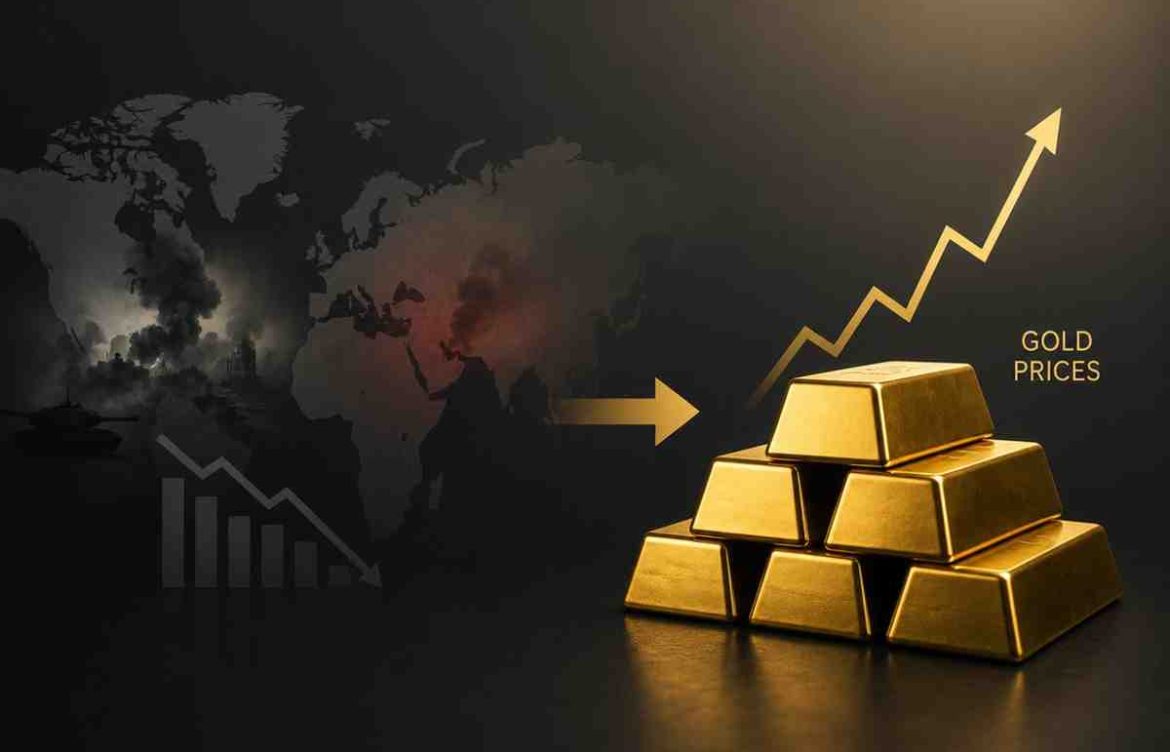
Global conflicts, economic slowdowns, inflation concerns, and currency volatility often influence investor behaviour across financial markets. During uncertain periods, many investors shift toward assets perceived as relatively stable, which is why gold frequently gains attention during geopolitical and economic stress.
Thank you for reading this post, don't forget to subscribe!For Indian investors, understanding the relationship between global uncertainty and gold prices is important because domestic gold rates are affected not only by international demand but also by factors such as the ₹-USD exchange rate, inflation, import duties, and monetary policy decisions by the Reserve Bank of India.
This article explains how economic crises affect gold prices, the impact of wars on gold prices, and why gold is often considered a safe haven investment during global conflicts.
How Crises and Wars Influence Gold Prices
| Event or Factor | Possible Impact on Gold Prices |
| Economic recession | Increased investor demand for gold |
| Wars and geopolitical tensions | Higher safe-haven buying |
| Inflation rise | Gold may act as an inflation hedge |
| Weak Indian Rupee | Domestic gold prices may rise |
| Stock market volatility | Investors may diversify into gold |
| Higher interest rates | Can limit gold price growth |
Why is Gold Considered a Safe-Haven Investment during Global Conflicts?
Gold has historically been viewed as a store of value during periods of financial instability. Unlike equities or corporate debt instruments, gold is not directly linked to the performance of a single company or economy.
This explains why searches related to safe haven investment in global conflicts increase whenever there is geopolitical uncertainty or economic stress.
Investors often consider gold during events such as:
- Global military conflicts
- Economic recessions
- Banking crises
- Inflationary cycles
- Currency depreciation
- Trade disruptions
In India, gold also holds cultural and financial importance, making it a commonly tracked asset during uncertain economic conditions.
How Economic Crises Affect Gold Prices
One of the most searched investor queries is: How economic crises affect gold prices?
Gold prices are influenced by several interconnected economic and behavioural factors during crises.
- Investor Shift toward Defensive Assets
During economic slowdowns, investors may reduce exposure to volatile asset classes such as equities and move capital toward comparatively defensive investments.
For example:
- During the 2008 global financial crisis
- The COVID-19 pandemic
- Banking stress periods in global markets
gold prices witnessed increased investor attention globally.
In India, gold demand often rises during periods when market volatility affects indices such as the:
- NIFTY 50
- BSE Sensex
- Inflation and Currency Weakness
Economic crises are frequently followed by fiscal stimulus measures and liquidity expansion by central banks worldwide. Over time, these measures can contribute to inflationary concerns.
Gold is often viewed as a hedge against inflation because it may preserve purchasing power better than fiat currencies during prolonged inflationary periods.
Indian gold prices are also affected by the ₹-USD exchange rate. Since gold is globally traded in US Dollars, depreciation in the Indian Rupee can increase domestic gold prices even when international prices remain stable.
This is why searches such as:
- Gold price during economic crisis
- Gold investment during inflation
- Will gold prices rise during recession?
remain consistently relevant among retail investors.
What Is the Impact of Wars on Gold Prices?
The impact of wars on gold prices is closely linked to uncertainty in global financial systems.
Wars and geopolitical conflicts can affect:
- Global trade routes
- Energy prices
- Inflation levels
- Currency stability
- Investor confidence
When uncertainty rises, institutional and retail investors often reassess portfolio allocations, which may increase demand for gold.
Historical Events That Influenced Gold Prices
Several geopolitical events have historically affected gold markets, including:
- Gulf War
- Russia-Ukraine conflict
- Middle East tensions
- US-China trade disputes
- Energy supply disruptions
However, gold prices do not automatically rise during every conflict. Market reactions depend on:
- Duration of the crisis
- Interest rate expectations
- Central bank policies
- Global liquidity conditions
- Strength of the US Dollar
How Do Interest Rates Influence Gold Prices?
Interest rates are among the most important drivers of gold prices globally.
Gold does not generate fixed income like bonds or fixed deposits. Therefore, when central banks aggressively increase interest rates, investors may prefer interest-bearing assets.
Institutions such as:
- US Federal Reserve
- Reserve Bank of India
play an important role in influencing global and domestic gold market trends through monetary policy decisions.
Higher interest rates may moderate gold price growth even during periods of economic uncertainty.
Why Indian Investors Monitor Gold during Economic Uncertainty
Gold remains one of the most tracked asset classes among Indian households. Apart from jewellery demand, many investors use gold for diversification purposes.
Today, Indian investors have multiple ways to invest in gold.
Common Gold Investment Options in India
| Investment Option | Key Characteristics |
| Physical Gold | Traditional ownership, storage required |
| Gold ETFs | Exchange-traded market-linked exposure |
| Sovereign Gold Bonds (SGBs) | Government-backed securities linked to gold prices |
| Digital Gold | Small-ticket online gold investments |
Each option has different taxation, liquidity, and cost considerations.
Investors searching for:
- Best way to invest in gold in India
- Gold ETF vs physical gold during crisis
- Gold investment during geopolitical tensions
should evaluate investments based on:
- Financial goals
- Investment horizon
- Risk tolerance
- Liquidity requirements
Does Gold Always Perform Well During Crises?
Although gold is often considered a defensive asset, prices can remain volatile in the short term.
There have been periods where gold prices temporarily corrected during crises due to:
- Profit booking
- Rising bond yields
- Stronger US Dollar
- Liquidity requirements in global markets
Therefore, gold should not be viewed as a guaranteed-return asset.
Financial planners generally consider gold as a diversification component rather than a standalone wealth creation strategy.
Key Factors Affecting Gold Prices in India
Apart from wars and economic crises, Indian gold prices are influenced by several domestic and global variables.
| Factor | Influence on Gold Prices |
| ₹-USD exchange rate | Weak rupee can increase gold prices |
| Global inflation | May support gold demand |
| Central bank gold purchases | Can affect supply-demand dynamics |
| RBI monetary policy | Influences liquidity and inflation expectations |
| Import duties and taxes | Affect domestic pricing |
| Jewellery demand | Seasonal demand impacts pricing |
Understanding these factors can help investors interpret market movements more rationally rather than reacting emotionally during volatility.
Key Takeaways
- Gold prices are often influenced by economic uncertainty and geopolitical tensions.
- Inflation, currency depreciation, and investor sentiment play important roles in gold price movement.
- Wars and global conflicts may increase demand for defensive assets such as gold.
- Indian gold prices are affected by both international prices and the ₹-USD exchange rate.
- Gold can support portfolio diversification, but short-term volatility remains possible.
Conclusion
The relationship between global conflicts, economic crises, and gold prices is influenced by multiple economic and behavioural factors. During uncertain periods, gold often attracts investor attention because of its perceived ability to preserve value.
However, gold prices remain sensitive to inflation trends, interest rate decisions, currency movements, and central bank policies. For Indian retail investors, understanding these broader market drivers can help create a more balanced perspective toward gold investing.
Before making investment decisions, investors should assess their financial goals, risk appetite, and time horizon carefully. Consulting a SEBI-registered financial adviser may help determine whether gold aligns with an individual’s overall asset allocation strategy.
Related Blogs:
Why Silver Prices Fluctuate More Than Gold: Key Factors Explained
Occasion-Based Spending Trends and Their Role in Jewellery Stocks
Top 5 Jewellery Stocks in India
Best Jewellery Stocks in India
Best Gold Stocks in India
Why Gold and Silver ETFs Are Important for Portfolio Diversification in India
Digital Gold: Meaning, Features, and How It Works
How Rupee–Dollar Movement Affects Gold and Silver ETF Returns in India
Role of Gold and Silver ETFs During Market Crashes and Economic Uncertainty
What Happens to Gold ETFs If the Stock Market Crashes?
SIP vs Lump Sum Investment in Gold and Silver ETFs: Which Is Better?
Beginner’s Guide to Gold and Silver ETF Investment in India
Impact of Global Commodity Prices on Indian Gold and Silver ETFs
What are Closed-Ended Mutual Funds?
Lump Sum Investments – How Is It Different from an SIP?
What Are Open Ended Mutual Funds?
What is Reversal Trading?
What Is an Auction Market and How Does It Work?
Understanding Mutual Fund SIP Returns: How to Calculate and Maximize Your Earnings
SIP Calculator and Inflation: Understanding How Inflation Impacts Your Mutual Fund Returns
SIP vs. Lumpsum: What’s the Best Way to Invest in Mutual Funds for Retirement?
How to Use a SIP Calculator for Investment Planning?
Reach Your Financial Milestones Sooner with Step-Up SIPs
What is a SIP Calculator and How Can It Help?
SIP vs Lump Sum: Which Investment Strategy Is Better?
Why Smart Investors in India are Choosing Systematic Investment Plan (SIPs)
How to Start a SIP for Your Child’s Education or Future Goals
The Power of SIPs: Why Consistency Beats Timing the Market
Disclaimer: This blog post is intended for informational purposes only and should not be considered financial advice. The financial data presented is subject to change over time, and the securities mentioned are examples only and do not constitute investment recommendations. Always conduct thorough research and consult with a qualified financial advisor before making any investment decisions.
Why do gold prices rise during economic crises?
Gold prices may rise during economic crises because investors often shift toward relatively defensive assets when financial markets become volatile.
How do wars affect gold prices?
Wars and geopolitical conflicts can increase uncertainty around trade, inflation, and economic growth, which may increase investor demand for gold.
Is gold a good hedge against inflation in India?
Gold is commonly considered an inflation hedge because it may preserve purchasing power better than paper currencies during prolonged inflationary periods.
What affects gold prices in India more — global prices or the rupee?
Indian gold prices are influenced by both international gold prices and the ₹-USD exchange rate. A weaker rupee can increase domestic gold prices even if global prices remain stable.
Which is better during economic uncertainty: Gold ETFs or Sovereign Gold Bonds?
Gold ETFs provide market-linked liquidity, while Sovereign Gold Bonds offer government-backed exposure and periodic interest payments. Suitability depends on investment goals and holding period.
Is gold investment completely risk-free during global conflicts?
No. Although gold is often considered a defensive asset, prices can remain volatile depending on interest rates, currency movement, and investor sentiment.
