

Global LNG Supply Chains and Their Impact on India’s Fertilizer Stocks
Global LNG Supply Chains and Their Impact on India’s Fertilizer Stocks
Global LNG prices directly influence the cost structure of India’s fertilizer companies because natural gas is a key input for urea production. When LNG prices rise, production costs increase, leading to higher subsidy requirements and potential pressure on company cash flows. For investors, tracking LNG price trends, government subsidy policies, and gas sourcing strategies is essential to understanding fertilizer stock performance in India.
Thank you for reading this post, don't forget to subscribe!India’s fertilizer sector is closely tied to global energy markets. Among all inputs, natural gas plays a central role, making the industry highly sensitive to global LNG dynamics. As India depends significantly on imports to meet its gas requirements, any disruption in supply chains or pricing can have a cascading effect on production economics.
For investors researching the global LNG supply chain impact on India, this relationship offers valuable insights into how external factors shape domestic sector performance. This article explains the mechanics of LNG supply chains, their relevance to fertilizer companies, and how LNG prices and fertilizer stocks in India are interconnected.
What Is the Role of LNG in India’s Fertilizer Industry?
Natural gas is the primary feedstock used in ammonia production, which is further processed into urea. Since domestic gas production does not fully meet industrial demand, India relies on LNG imports.
This makes the natural gas supply and fertilizer industry India relationship structurally important. Any fluctuation in LNG prices or availability directly impacts:
- Cost of production
- Government subsidy burden
- Profitability of fertilizer companies
How Do Global LNG Supply Chains Work?
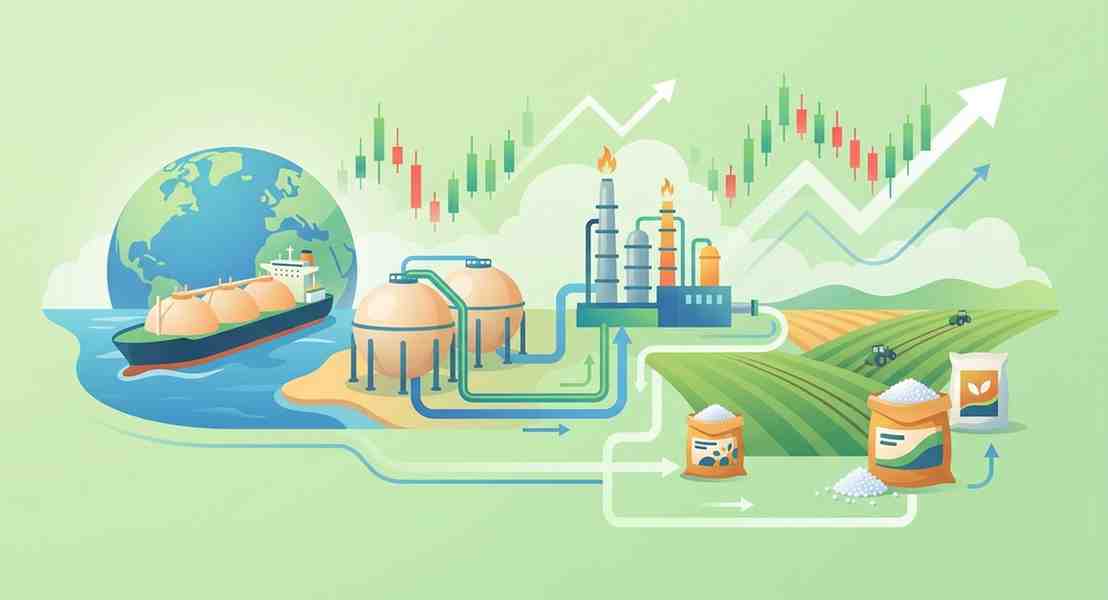
The LNG supply chain involves multiple global stages:
- Gas extraction in exporting countries such as Qatar, the United States, and Australia
- Liquefaction, where gas is cooled into liquid form
- Shipping via LNG carriers across international routes
- Regasification at Indian terminals
- Distribution to industrial users, including fertilizer plants
Disruptions at any stage—whether geopolitical tensions, weather events, or logistical constraints—can influence supply and pricing.
How Does the Global LNG Supply Chain Impact India?
The global LNG supply chain impact on India can be understood through the following channels:
- Price Volatility
Global LNG prices are influenced by demand from regions like Europe and East Asia. During high-demand periods, India may face higher import costs.
- Supply Constraints
Limited availability due to export restrictions or infrastructure bottlenecks can affect procurement strategies for Indian companies.
- Currency Risk
Since LNG imports are priced in US dollars, exchange rate fluctuations add another layer of cost variability.
How Do LNG Prices Affect Fertilizer Stocks in India?
The relationship between LNG prices and fertilizer stocks India is influenced by both market forces and government intervention.
Cost and Subsidy Dynamics
In India, urea prices are regulated, and the government provides subsidies to manufacturers. When LNG prices increase:
- Production costs rise
- Subsidy requirements expand
- Working capital cycles may stretch
Investor Sentiment
Fertilizer stocks may react to:
- Changes in LNG price trends
- Government subsidy announcements
- Earnings visibility and margin expectations
This explains the link between energy prices and fertilizer stock performance India.
LNG Imports Effect on Indian Fertilizer Companies
The LNG imports effect on Indian fertilizer companies varies based on sourcing strategies:
Companies with Long-Term Contracts
- More stable pricing
- Better cost predictability
- Lower exposure to short-term volatility
Companies Dependent on Spot LNG
- Higher exposure to price fluctuations
- Potential margin pressure during price spikes
Companies Using Domestic Gas Mix
- Partial insulation from global price swings
- Relative cost advantage in certain scenarios
Key Factors That Influence LNG Prices Globally
Understanding these drivers helps investors track the natural gas supply and fertilizer industry India connection:
- Geopolitical developments affecting major gas producers
- Seasonal demand patterns (winter heating, summer cooling)
- Energy transition policies increasing demand for cleaner fuels
- Infrastructure capacity constraints in liquefaction and regasification
Key Investment Factors for Retail Investors
For those exploring fertilizer stocks, the following factors are relevant:
- LNG Price Trends
Monitor international benchmarks to anticipate cost pressures.
- Government Policies
Track subsidy allocation, pricing controls, and disbursement timelines from relevant authorities.
- Gas Sourcing Strategy
Assess whether companies rely on long-term contracts or spot markets.
- Financial Indicators
Evaluate:
- Operating margins
- Subsidy receivables
- Working capital cycles
Impact Summary Table
| Factor | Impact on Fertilizer Companies | Investor Interpretation |
| Rising LNG prices | Higher input costs | Margin pressure risk |
| Stable long-term contracts | Predictable costs | Earnings visibility improves |
| Subsidy delays | Cash flow stress | Short-term sentiment impact |
| Currency depreciation | Higher import cost | Additional cost burden |
- The fertilizer sector operates under government regulation and subsidy frameworks.
- Policy decisions related to pricing and subsidies significantly influence company performance.
- Investors should monitor updates from relevant regulatory bodies such as the Securities and Exchange Board of India for compliance-related developments.
Conclusion
- LNG is a critical input for India’s fertilizer industry.
- Global supply chain disruptions can impact costs and availability.
- Subsidy mechanisms provide partial insulation but do not eliminate risks.
- Investors should track LNG prices, policy updates, and company-level gas sourcing strategies.
- Sources and Official References
Securities and Exchange Board of India
Association of Mutual Funds in India
NSE Indices Limited
BSE LimitedRelated Blogs:
From Gas to Growth: Understanding the Link between Energy Prices and Fertilizer Stocks in India
India’s Fertilizer Import Dependence and Its Impact on Stock Prices
How to Analyze Fertilizer Stocks Before Investing
How Commodity Price Fluctuations Affect Fertilizer and Agri Stock Performance
Fertilizer and Agriculture Stocks: How Supply Chain Disruptions Ripple Through the Market
Long-Term vs Short-Term Risks in Indian Fertilizer and Agriculture Stocks
Decoding Fertilizer Subsidies: How Government Policy Impacts Your Stocks
Global Gas Prices & Their Ripple Effect on Indian Fertilizer Stocks
The Future of Farming: Are Nano Fertilizers the Next Big Thing for Indian Agriculture Stocks?
Riding the Monsoon: How Seasonal Rains Influence Fertilizer Stock Performance
Best Fertilizer Stocks in India
5 Best Chemical Stocks for Long-Term Investment in India
Top 5 Chemical Stocks in India
Best Chemical Stocks in India
Top 5 Oil and Gas Stocks in India
Renewable Energy Stocks: A Core Component of a Robust 2025 Portfolio
Best Green Energy Stocks in India 2025
Top 5 Fertilizer Stocks in India
Best Fertilizer Stocks in India
Best Pharmaceutical Stocks in IndiaDisclaimer: This blog post is intended for informational purposes only and should not be considered financial advice. The financial data presented is subject to change over time, and the securities mentioned are examples only and do not constitute investment recommendations. Investors should conduct their own research or consult a registered advisor under the guidelines of the Securities and Exchange Board of India.
