

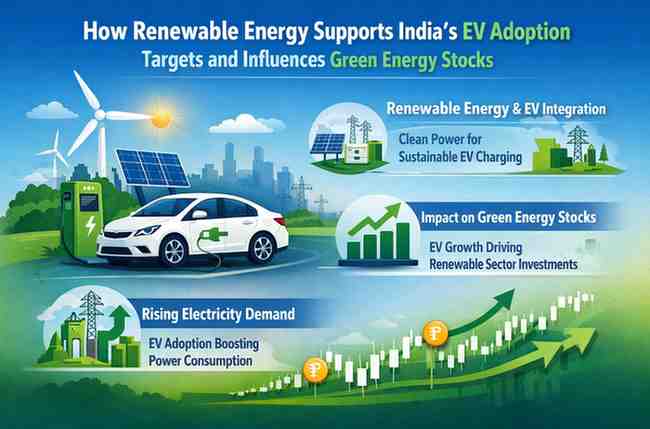
How Renewable Energy Supports India’s EV Adoption Targets and Influences Green Energy Stocks
How Renewable Energy Supports India’s EV Adoption Targets and Influences Green Energy Stocks
India’s electric vehicle (EV) story is no longer limited to cleaner mobility or reduced fuel imports. It is increasingly becoming part of a larger energy transition narrative—one that closely links EV adoption with renewable power generation and capital markets. As EV penetration rises, so does the demand for clean electricity, grid upgrades, and long-term investment in sustainable infrastructure. This interconnected shift is shaping not only policy priorities but also investor interest in green energy stocks.
Thank you for reading this post, don't forget to subscribe!Here, we explore how renewable energy supports India’s EV adoption targets, examine why electric vehicle adoption and renewable power demand are closely connected, and assess how these developments are influencing green energy stocks in the Indian market.
Understanding India’s EV Adoption Targets
India has set ambitious goals to accelerate electric mobility as part of its climate commitments and energy security strategy. Government initiatives such as the Faster Adoption and Manufacturing of Electric Vehicles (FAME) scheme, state-level EV policies, and incentives for domestic battery manufacturing have created momentum across two-wheelers, passenger vehicles, and commercial fleets.
However, EV adoption is not just about replacing internal combustion engines with electric motors. The environmental benefit of EVs depends heavily on the source of electricity used to charge them. This is where renewable energy and EV adoption in India become deeply intertwined.
Without a parallel shift toward clean power, large-scale EV adoption could strain fossil fuel–based electricity systems, limiting emissions reduction benefits. Recognising this, policymakers and industry stakeholders are increasingly aligning EV growth with renewable energy integration.
Why Renewable Energy Is Central to EV Growth
Electric vehicles are only as clean as the electricity that powers them. India’s renewable energy capacity—driven by solar, wind, and emerging storage solutions—plays a central role in making EV adoption sustainable over the long term.
Solar power, in particular, is becoming a preferred solution for EV charging infrastructure. Rooftop solar installations at residential societies, office parks, and public charging stations reduce dependence on grid electricity during peak hours. Similarly, wind energy supports grid stability in regions with high EV penetration, especially in industrial and logistics corridors.
This connection highlights the growing importance of electric vehicle adoption and renewable power demand. As EV numbers increase, electricity consumption patterns change, creating opportunities for clean energy producers while also requiring smarter grid management.
India EV Targets and Renewable Energy Integration
The integration of EVs with renewable energy is not accidental; it is increasingly being planned at the policy and infrastructure level. Several state governments are encouraging co-location of renewable generation assets with EV charging hubs. Battery storage solutions are also being explored to manage intermittent renewable supply while supporting round-the-clock charging needs.
From a grid perspective, EVs can act as both consumers and potential stabilisers of electricity demand. Smart charging systems allow vehicles to charge during periods of surplus renewable generation, such as midday solar peaks. Over time, vehicle-to-grid technologies could further enhance this integration, though they are still at a developing stage in India.
This approach reflects a broader understanding that India EV targets and renewable energy integration must progress together. Achieving one without the other would create operational inefficiencies and dilute long-term environmental outcomes.
The Impact of EV Growth on Green Energy Stocks
From an investment standpoint, EV adoption has added a new dimension to the clean energy theme. The impact of EV growth on green energy stocks is becoming increasingly visible as power producers, equipment manufacturers, and infrastructure providers benefit from rising electricity demand linked to mobility.
Renewable energy companies with long-term power purchase agreements, especially those supplying power to industrial and commercial users, stand to gain from EV-related demand growth. Similarly, firms involved in solar modules, wind turbines, energy storage, and grid management technologies are finding new relevance as EV infrastructure expands.
However, it is important to note that stock performance is influenced by multiple factors, including regulatory clarity, project execution, capital costs, and balance sheet strength. EV growth acts as a demand-side tailwind, but it does not eliminate sector-specific risks.
Green Energy Stocks Benefiting from EV Expansion
While it is not appropriate to generalise across all companies, certain segments within the green energy ecosystem are more directly exposed to EV expansion. Power generation companies with a strong renewable portfolio are natural beneficiaries, especially as charging infrastructure scales up across urban and semi-urban regions.
Transmission and distribution companies investing in grid modernisation also play a crucial role. EV charging requires reliable power supply, load balancing, and digital monitoring—all of which support long-term investments in power networks. In addition, companies focused on energy storage and battery management systems are emerging as critical enablers of both renewable energy and EV ecosystems.
For investors, understanding how green energy stocks benefiting from EV expansion fit into the broader energy value chain is essential. The opportunity lies not only in power generation but also in the supporting infrastructure that makes EV adoption viable at scale.
Demand Dynamics: EVs and Electricity Consumption
One of the most significant structural changes driven by EV adoption is the shift in electricity demand patterns. Unlike traditional residential consumption, EV charging introduces new peak and off-peak dynamics. This creates both challenges and opportunities for renewable energy integration.
Managed correctly, EV charging can improve renewable energy utilisation rates by absorbing excess generation. For example, workplace charging during daytime hours aligns well with solar generation peaks. Over time, this alignment can enhance project economics for renewable energy developers while reducing stress on conventional power sources.
This evolving relationship reinforces why electric vehicle adoption and renewable power demand should be analysed together rather than in isolation.
Investor Perspective: What to Watch Going Forward
For investors evaluating this theme, it is important to focus on fundamentals rather than short-term narratives. Policy consistency, execution capability, access to capital, and technological adaptability will determine how companies benefit from the EV–renewable energy linkage.
Additionally, investors should consider the pace of EV adoption across different vehicle categories. Two-wheelers and commercial fleets may drive near-term electricity demand, while passenger vehicles could shape longer-term trends. Each segment influences renewable energy demand differently.
The broader takeaway is that renewable energy and EV adoption in India represent a structural shift rather than a cyclical trend. While market volatility will continue, the underlying drivers are rooted in policy alignment, energy economics, and changing consumer behaviour.
Conclusion
India’s transition to electric mobility is inseparable from its renewable energy ambitions. EV adoption increases electricity demand, while renewable energy ensures that this demand is met sustainably. Together, they are reshaping energy systems, infrastructure planning, and investment opportunities.
For market participants, understanding how EV growth influences green energy stocks requires a nuanced view—one that goes beyond headlines and considers policy integration, grid readiness, and long-term demand patterns. As India continues to align its EV targets with renewable energy integration, the intersection of mobility and clean power will remain a key area of focus for both policymakers and investors.
Related Blogs:
EV Charging Market Expansion and Its Impact on Green Energy Investment in India
EV Charging Stations and Grid Modernisation: Implications for Renewable Energy Stocks
Electric Vehicles and Solar Power: Emerging Opportunities for Indian Renewable Stocks
From EV Batteries to Wind Farms: Understanding the Interconnected Growth of Clean Energy Sectors
India’s Semiconductor Sovereignty: The Geopolitical Tailwinds Boosting Domestic Stock
How the ‘Semicon India’ Program is Supercharging Semiconductor Stocks
India’s Sunrise Sector: Why Semiconductor Stocks are a Must-Watch for Smart Investors
Best Semiconductor Stocks in India
Why Does Your Portfolio Need Semiconductor Stocks?
Best Semiconductor Stocks in India 2024
Top 5 Semiconductor Stocks in India
Top 5 Cybersecurity Stocks in India
Best Cybersecurity Stocks in India
Can Defense Stocks Shield Your Investment Portfolio?
Investing in the Convergence of Cybersecurity and Data Centers
Top Trends in Data Centers and Cybersecurity in India: What Investors Need to Know
Riding the Wave: How Technology is Reshaping Stock Trading
Best Green Energy Stocks in India 2025
Renewable Energy Stocks: A Core Component of a Robust 2025 Portfolio
How Investors Can Capitalize on the Growth of Renewable Energy in India
India’s Renewable Energy Revolution: Beyond Solar and Wind
Best Green Energy Stocks in India
Best Solar Stocks in India
Best Green Hydrogen Stocks in India
Top 5 Solar Energy Stocks in India
Best Green Hydrogen Stocks in India
Top 5 Green Energy Stocks in India
Disclaimer: This blog post is intended for informational purposes only and should not be considered financial advice. The financial data presented is subject to change over time, and the securities mentioned are examples only and do not constitute investment recommendations. Always conduct thorough research and consult with a qualified financial advisor before making any investment decisions.
