

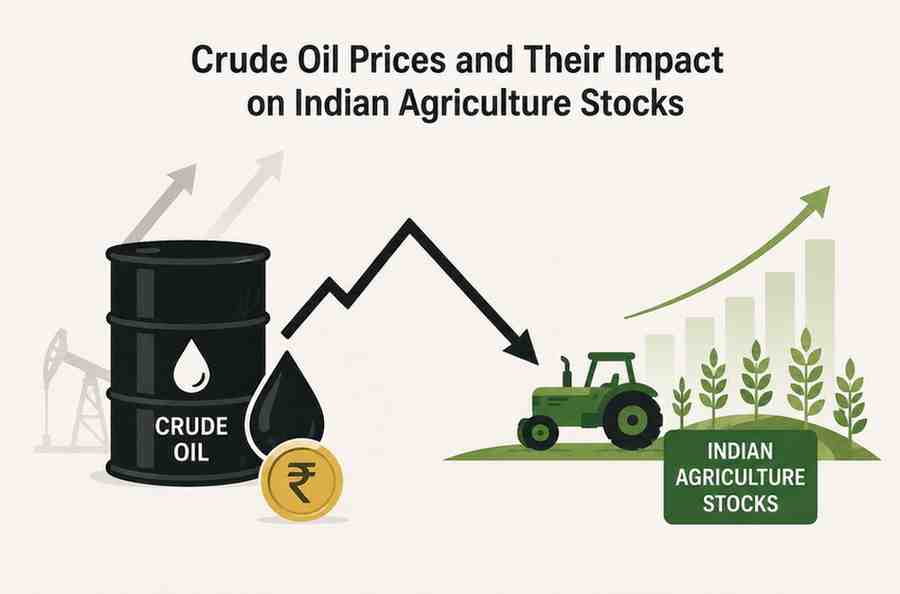
Crude Oil prices and Their Impact on Indian Agriculture Stocks
Crude Oil prices and Their Impact on Indian Agriculture Stocks
Global crude oil prices influence several parts of the Indian economy, and the agriculture sector is no exception. From fertilizer manufacturing and irrigation costs to transportation expenses and rural inflation, crude oil movements can affect the operational environment for agriculture-related companies listed on Indian stock exchanges.
Thank you for reading this post, don't forget to subscribe!For Indian retail investors, understanding the relationship between oil prices and agriculture stocks can provide broader sector-level insights. While crude oil prices alone do not determine stock performance, they often influence input costs, profitability trends, and market sentiment across agriculture-linked industries.
This article explains the Crude Oil Prices Impact on Indian Agriculture Stocks, how rising oil prices affect agriculture-related businesses, and why some agriculture companies may benefit when crude oil prices decline.
Why Do Crude Oil Prices Affect Indian Agriculture Stocks?
Agriculture and energy markets are closely interconnected. In India, farming operations and agricultural supply chains depend significantly on fuel, transportation, fertilizers, and industrial inputs linked to petroleum products.
The Impact of Global Oil Prices on Indian Agri Stocks becomes visible through multiple channels:
- Diesel costs for tractors and irrigation pumps
- Transportation expenses for crops and agri-products
- Fertilizer production costs
- Agrochemical manufacturing inputs
- Rural inflation and farm profitability
Since India imports a large portion of its crude oil requirements, global oil price volatility can directly or indirectly affect agriculture-related sectors.
How Rising Crude Oil Prices Affect Agriculture Sector Stocks in India
One of the most searched investor queries today is: How Rising Crude Oil Prices Affect Agriculture Sector Stocks in India.
The impact usually depends on the specific agriculture segment involved.
- Higher Diesel Costs Increase Farming Expenses
Diesel is widely used in:
- Irrigation pumps
- Tractors
- Harvesting equipment
- Rural transportation
When crude oil prices rise globally, diesel prices may also increase, raising operational expenses for farmers. This can affect farm profitability and rural purchasing power.
Companies connected to:
- Farm machinery
- Agricultural inputs
- Rural financing
- Crop logistics
may witness changes in demand trends depending on the broader agricultural environment.
- Fertilizer Companies Face Raw Material Cost Pressure
The Crude Oil and Fertilizer Stocks Correlation in India is particularly important because fertilizer production depends on energy-intensive processes and imported raw materials.
Higher crude oil and natural gas prices may increase:
- Manufacturing expenses
- Import costs
- Working capital requirements
However, fertilizer companies in India also operate within a regulated environment influenced by:
- Government subsidies
- Nutrient pricing policies
- Import support mechanisms
As a result, the impact may vary across companies depending on their operational structure and cost efficiency.
- Transportation and Supply Chain Costs Rise
Agriculture products move through extensive transportation networks before reaching consumers or export markets.
Rising fuel prices can increase:
- Freight charges
- Cold-chain logistics costs
- Packaging expenses
- Distribution costs
Companies involved in food processing, warehousing, and agri-logistics may therefore experience margin pressure when oil prices remain elevated for longer periods.
Which Agriculture Segments Are Most Sensitive to Crude Oil Prices?
Indian agriculture stocks are spread across multiple industries. Each segment reacts differently to oil price fluctuations.
Fertilizer Stocks
Fertilizer manufacturers are among the most closely watched sectors during periods of crude oil volatility.
Higher energy prices may affect:
- Production costs
- Import dependency
- Operating margins
At the same time, policy support and subsidy frameworks may partially offset these pressures.
Agrochemical Companies
Agrochemical manufacturers use petroleum-based intermediates for several products.
Rising oil prices may:
- Increase input costs
- Affect export competitiveness
- Influence pricing strategies
Companies with diversified export operations may manage these fluctuations differently compared to purely domestic businesses.
Farm Equipment and Tractor Companies
Farm mechanization companies may experience indirect effects from rising crude oil prices.
Higher diesel costs can sometimes reduce:
- Rural purchasing sentiment
- Farm profitability
- Equipment replacement demand
However, long-term mechanization trends in India are also influenced by:
- Government rural spending
- Crop output
- Monsoon conditions
- Agricultural productivity initiatives
Irrigation and Agricultural Infrastructure Companies
Businesses involved in:
- Irrigation systems
- Agricultural pipes
- Rural infrastructure
- Warehousing
may also face changes in raw material costs linked to petroleum-derived industrial products.
Agriculture Stocks Benefiting from Falling Crude Oil Prices in India
Investors also monitor Agriculture Stocks Benefiting from Falling Crude Oil Prices in India because lower energy prices can improve operational conditions across several agricultural industries.
Lower Input Costs
Falling oil prices may reduce:
- Transportation expenses
- Manufacturing costs
- Packaging costs
- Irrigation-related fuel expenses
This can improve cost efficiency for:
- Fertilizer companies
- Agrochemical businesses
- Food processing firms
- Agri-logistics companies
Better Rural Sentiment
Lower diesel prices may reduce farming costs and improve rural disposable income.
This can positively influence:
- Tractor demand
- Agricultural equipment sales
- Farm input purchases
- Rural consumption trends
Reduced Inflationary Pressure
Crude oil prices also influence broader inflation trends in India.
Moderate oil prices may help:
- Stabilize input costs
- Reduce supply chain pressure
- Improve consumption demand
- Support broader economic sentiment
The Reserve Bank of India (RBI) closely monitors inflationary pressures linked to crude oil and imported commodities because they can affect monetary policy and economic stability.
Comparison Table: Impact of Rising vs Falling Crude Oil Prices
| Agriculture Segment | Rising Crude Oil Prices | Falling Crude Oil Prices |
| Fertilizer Companies | Higher production costs | Improved margin support |
| Agrochemical Firms | Input cost pressure | Better operational efficiency |
| Farm Equipment Companies | Weaker rural sentiment | Improved demand environment |
| Agri Logistics Businesses | Rising freight expenses | Lower transportation costs |
| Irrigation Companies | Higher industrial input costs | Cost stabilization |
Key Factors Investors Should Monitor
Retail investors analysing agriculture stocks linked to crude oil prices often track multiple macroeconomic and sector-specific indicators.
Global Crude Oil Trends
Benchmark crude oil prices such as Brent crude influence India’s import bill and industrial input costs.
Government Policies
Indian agriculture-related sectors are influenced by:
- Fertilizer subsidies
- Import duties
- Energy taxation
- Export regulations
- Rural development policies
Policy changes can either reduce or amplify the effect of oil price fluctuations.
Monsoon and Crop Output
Agriculture stocks remain heavily dependent on:
- Monsoon forecasts
- Crop production trends
- Rural income growth
Even during stable oil prices, weak monsoon conditions can affect agricultural demand and investor sentiment.
Currency Movements
A weaker Indian rupee can increase import costs for:
- Crude oil
- Fertilizer raw materials
- Agrochemical inputs
This may add pressure on operating expenses for agriculture-linked businesses.
Key Takeaways
- Crude oil prices influence agriculture stocks through fuel, fertilizer, logistics, and inflation channels.
- Fertilizer and agrochemical companies are among the most sensitive sectors.
- Falling oil prices may support rural demand and operational efficiency for certain businesses.
- Agriculture stock performance also depends on monsoon trends, government policies, and broader economic conditions.
- Investors should evaluate company fundamentals alongside macroeconomic indicators rather than relying solely on oil price movements.
Conclusion
The Crude Oil Prices Impact on Indian Agriculture Stocks is an important macroeconomic theme for investors tracking agriculture-linked sectors in India. Rising oil prices can increase transportation, fertilizer, and operational costs, while falling prices may support margins and rural sentiment across several industries.
The Impact of Global Oil Prices on Indian Agri Stocks extends beyond immediate operational expenses and also influences inflation expectations, policy decisions, and investor sentiment.
However, investors should avoid analysing agriculture stocks solely through crude oil trends. Factors such as monsoon performance, government policies, rural demand, company balance sheets, and long-term sector growth remain equally important.
A balanced and research-oriented approach can help retail investors better understand how macroeconomic trends interact with agriculture-related businesses listed on Indian stock exchanges.
Securities and Exchange Board of India
Association of Mutual Funds in India
NSE Indices Limited
BSE Limited
Related Blogs:
From Gas to Growth: Understanding the Link between Energy Prices and Fertilizer Stocks in India
Global LNG Supply Chains and Their Impact on India’s Fertilizer Stocks
India’s Fertilizer Import Dependence and Its Impact on Stock Prices
How to Analyze Fertilizer Stocks Before Investing
How Commodity Price Fluctuations Affect Fertilizer and Agri Stock Performance
Fertilizer and Agriculture Stocks: How Supply Chain Disruptions Ripple Through the Market
Long-Term vs Short-Term Risks in Indian Fertilizer and Agriculture Stocks
Decoding Fertilizer Subsidies: How Government Policy Impacts Your Stocks
Global Gas Prices & Their Ripple Effect on Indian Fertilizer Stocks
The Future of Farming: Are Nano Fertilizers the Next Big Thing for Indian Agriculture Stocks?
Riding the Monsoon: How Seasonal Rains Influence Fertilizer Stock Performance
Best Fertilizer Stocks in India
5 Best Chemical Stocks for Long-Term Investment in India
Top 5 Chemical Stocks in India
Best Chemical Stocks in India
Top 5 Oil and Gas Stocks in India
Renewable Energy Stocks: A Core Component of a Robust 2025 Portfolio
Best Green Energy Stocks in India 2025
Top 5 Fertilizer Stocks in India
Best Fertilizer Stocks in India
Best Pharmaceutical Stocks in India
Disclaimer: This blog post is intended for informational purposes only and should not be considered financial advice. The financial data presented is subject to change over time, and the securities mentioned are examples only and do not constitute investment recommendations. Investors should conduct their own research or consult a registered advisor under the guidelines of the Securities and Exchange Board of India.
How do crude oil prices impact Indian agriculture stocks?
Crude oil prices affect agriculture stocks through fuel costs, fertilizer production expenses, logistics charges, and inflation-related pressures. These factors can influence operating margins and rural demand conditions.
Why are fertilizer stocks linked to crude oil prices?
Fertilizer manufacturing depends on energy-intensive processes and imported raw materials. Rising crude oil and natural gas prices may increase production costs for fertilizer companies.
Which agriculture-related sectors are most sensitive to rising oil prices?
Fertilizer companies, agrochemical manufacturers, agri-logistics firms, and irrigation-related businesses are generally more sensitive to crude oil price fluctuations.
Can falling crude oil prices benefit agriculture companies?
Yes. Lower crude oil prices may reduce transportation and manufacturing costs while improving rural sentiment and farming profitability.
